What Is DeFi Lending? Exploring Decentralized Finance?
DeFi lending functions as a transparent, automated alternative to traditional banking by allowing individuals to lend and borrow assets without intermediaries. By leveraging blockchain technology, these systems replace human loan officers with self-executing smart contracts that manage interest rates and collateral requirements. Understanding how these platforms operate is essential for anyone looking to participate in the evolving digital economy.
The Mechanics of DeFi Lending
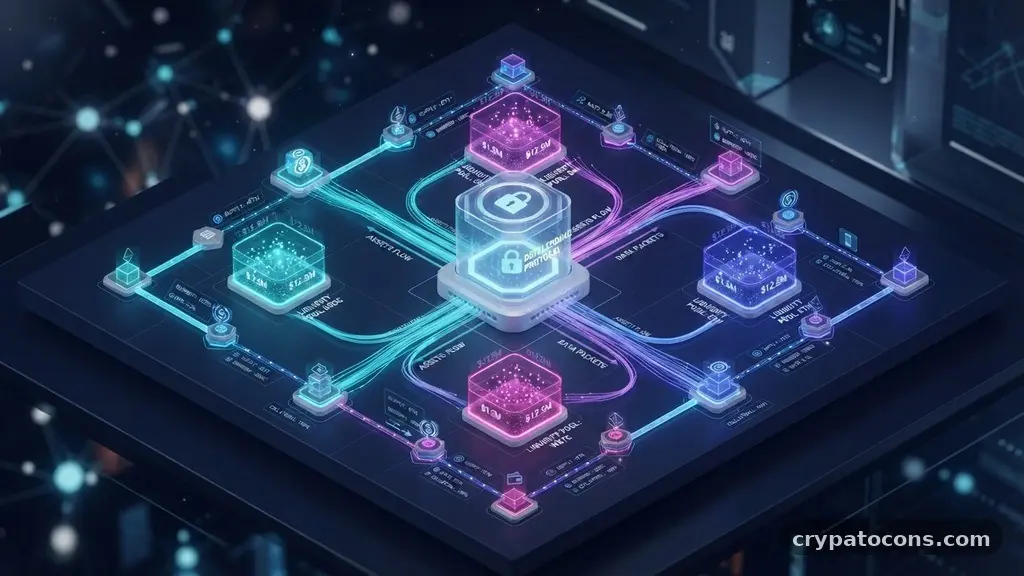
At its core, DeFi lending relies on liquidity pools where users deposit their crypto assets to earn interest. When a user provides liquidity, they essentially become a lender for the protocol, allowing others to borrow those funds. These transactions occur on decentralized networks, most notably Ethereum, which ensures that no single entity controls the movement of capital.
Smart contracts automatically adjust interest rates based on the supply and demand for a specific asset within the pool. If many people borrow a particular token, the cost to borrow that token rises to encourage more deposits.
Conversely, if there is an excess of supply, the interest rate drops to attract more borrowers. This real-time adjustment keeps the market in balance without requiring manual intervention from a central bank or financial institution.
Borrowers must provide collateral before they can take out a loan. This security deposit ensures that the protocol remains solvent even if a borrower fails to repay their debt.
If the value of the collateral drops below a specific threshold, the smart contract automatically triggers a liquidation process to recover the funds. This mechanism protects the liquidity providers and ensures the long-term stability of the lending ecosystem.
Key Participants in the Ecosystem
The ecosystem consists of three primary groups: lenders, borrowers, and liquidators. Lenders deposit their assets to generate passive income, often referred to as yield, which is paid by borrowers.
These individuals prioritize the security and efficiency of the protocol, seeking a balance between risk and reward. They benefit from the transparency of on-chain data, which allows them to track the health of the pool at any time.
Borrowers use these platforms to access liquidity without selling their long-term digital holdings. By posting collateral, they can obtain stablecoins or other assets for trading, leverage, or operational expenses.
They accept the risk of liquidation if their collateral value falls, making them active participants in managing market volatility. Their activity drives the demand that generates interest for lenders.
Liquidators play a vital role in maintaining the health of the market. These are typically automated bots or sophisticated users who monitor the collateral-to-debt ratios of active loans.
When a borrower’s collateral value drops too low, the liquidator pays off the debt in exchange for a portion of the collateral at a discounted rate. This process ensures that the protocol does not become insolvent during sudden market downturns.
Comparing Traditional and Decentralized Finance
The differences between traditional financial systems and decentralized protocols are fundamental. Traditional banks act as centralized gatekeepers, requiring credit checks, identity verification, and manual approval processes. In contrast, DeFi platforms are permissionless, meaning anyone with a digital wallet can participate immediately.
The following table highlights the operational differences between these two models:
| Feature | Traditional Lending | DeFi Lending |
|---|---|---|
| Accessibility | Restricted by location/credit | Global and permissionless |
| Intermediaries | Banks and brokers | Smart contracts/Code |
| Approval Time | Days or weeks | Instant |
| Transparency | Private/Opaque | Public and verifiable |
Traditional banks rely on legal contracts and human oversight to manage defaults. DeFi protocols rely on mathematical certainty and immutable code to enforce rules.
While traditional finance offers consumer protections and legal recourse, decentralized systems offer speed, accessibility, and 24/7 global market availability. Users must choose between the stability of regulated institutions and the autonomy provided by decentralized networks.
Risks and Security Considerations
Security is the primary concern for any user engaging with decentralized financial products. The most significant threat involves smart contract vulnerabilities, where a flaw in the code could allow bad actors to drain funds from a pool.
While audits from reputable security firms can mitigate these risks, they cannot eliminate them entirely. Users should prioritize platforms with long track records and multiple public code audits.
Market volatility poses another major risk for borrowers. Because most loans are over-collateralized, a sudden crash in the price of the collateral asset can lead to automatic liquidation.
If a borrower is not monitoring their position, they could lose a significant portion of their assets during a flash crash. Maintaining a high collateralization ratio is a common strategy to prevent unintended liquidation.
Regulatory uncertainty remains a persistent shadow over the sector. Governments around the world are currently evaluating how to classify and regulate these automated financial services.
Changes in legislation could impact the accessibility of certain protocols or introduce new tax requirements for users. Participants should stay informed about regional legal developments to ensure they are operating within the bounds of local requirements.
The Role of Collateral in Borrowing
Collateral is the backbone of the entire lending process, acting as a guarantee that the loan will be honored. In most instances, these loans are over-collateralized, meaning the value of the assets held as security exceeds the value of the loan itself. This approach minimizes the risk of default and ensures the protocol can always cover the lender’s principal.
Users can often use a variety of assets as collateral, including stablecoins, native network tokens, and wrapped versions of other cryptocurrencies. The protocol assigns a specific “loan-to-value” (LTV) ratio to each asset based on its historical volatility.
A highly stable asset like a dollar-pegged coin might allow for a 90% LTV, while a more volatile token might be limited to 50%. This risk-adjusted approach keeps the system functioning during periods of extreme price fluctuation.
Managing collateral requires constant attention to market conditions. If a borrower sees their assets declining in value, they have several options to avoid liquidation.
They can add more collateral to the position, pay down a portion of the loan, or convert their position into a less volatile asset. The ability to manage these positions in real-time is a unique feature of decentralized financial markets.
Common Types of Assets Used
The diversity of assets available on lending protocols has expanded significantly over the past few years. While early platforms focused almost exclusively on native tokens, modern protocols support a wide array of digital assets. This variety allows users to optimize their portfolio strategy by lending out idle assets or borrowing against them to gain exposure to new opportunities.
* Stablecoins: These are the most popular assets for lending due to their low volatility, making them ideal for risk-averse participants.
* Governance Tokens: Many protocols allow users to stake their governance tokens, enabling them to earn yield while maintaining voting rights.
* Wrapped Assets: Tokens from other blockchains, such as Bitcoin represented on Ethereum, are frequently used to gain liquidity without selling the underlying asset.
* Liquidity Provider Tokens: Users can often deposit their receipt tokens from other pools to earn additional yield on their existing investments.
This versatility allows for complex financial strategies that were previously impossible for the average investor. By combining different assets and protocols, users can create custom yield-generating strategies that match their specific risk tolerance. The ability to move assets across different protocols allows for efficient capital allocation across the entire digital ecosystem.
Techniques for Yield Optimization
Maximizing returns in the decentralized space requires a clear understanding of yield farming and liquidity mining. Yield farming involves moving assets between different protocols to capture the highest interest rates or incentive rewards. These rewards are often paid in the form of the protocol’s native governance token, which can significantly boost the overall return on investment.
However, yield optimization is not without its costs. Every transaction on a blockchain incurs a fee, which can eat into potential profits if the asset amounts are too small.
Users must calculate the “break-even” point for moving their funds to ensure that the increased yield justifies the gas costs. Automated yield aggregators have emerged to help users simplify this process by automatically rebalancing their positions.
Risk management is just as important as yield generation. High-yield opportunities often come with higher risks, such as exposure to newer, less-tested protocols.
A balanced approach typically involves allocating the bulk of capital to established, high-liquidity protocols while reserving a smaller portion for more experimental, higher-reward ventures. This strategy protects the primary portfolio while still allowing for growth.
Frequently Asked Questions
Is DeFi lending risky?
Yes, it carries significant risks, including smart contract bugs, market volatility, and potential regulatory changes. You should only invest what you are prepared to lose and conduct thorough research on any protocol before depositing funds.
How do I get my money out of DeFi?
Withdrawals are generally straightforward. You simply interact with the protocol interface, request the withdrawal of your assets, and the smart contract will transfer the funds back to your connected digital wallet after verifying your balance.
Which DeFi lending platform is the best?
There is no single “best” platform, as the right choice depends on your specific needs, the assets you hold, and your risk tolerance. Popular platforms often have higher liquidity and more extensive audit histories, which can be indicators of relative stability.
How does DeFi lending work for beginners?
It works by connecting lenders and borrowers through code rather than banks. You connect your wallet, choose an asset to lend or borrow, and the smart contract handles the interest and collateral automatically according to the rules of the protocol.
Do I need a lot of money to start?
No, there is generally no minimum deposit requirement for most protocols. However, you must account for blockchain transaction fees, which can make it expensive to move small amounts of capital, so it is often more efficient to work with larger sums.
Future Trends and Developments
The landscape of decentralized finance continues to evolve at a rapid pace. Developers are currently working on cross-chain lending, which would allow users to use collateral on one blockchain to secure a loan on another. This innovation would break down the silos between different networks and significantly increase the overall liquidity of the market.
Another emerging trend is the integration of real-world assets into decentralized protocols. By tokenizing physical property, stocks, or treasury bills, developers are creating a bridge between traditional finance and the blockchain.
This could enable users to borrow against their real-world investments using the same decentralized infrastructure. These advancements promise to expand the utility of these systems far beyond the current crypto-native audience.
As the technology matures, we can expect to see more user-friendly interfaces that abstract away the complexities of blockchain interaction. Improved security standards and better insurance products for protocols will also likely emerge to protect participants.
The growth of DeFi lending suggests a future where financial services are more inclusive, transparent, and efficient for everyone involved. By staying engaged with these developments, you can better navigate the opportunities available in this evolving sector.