What Is DePIN in Crypto?
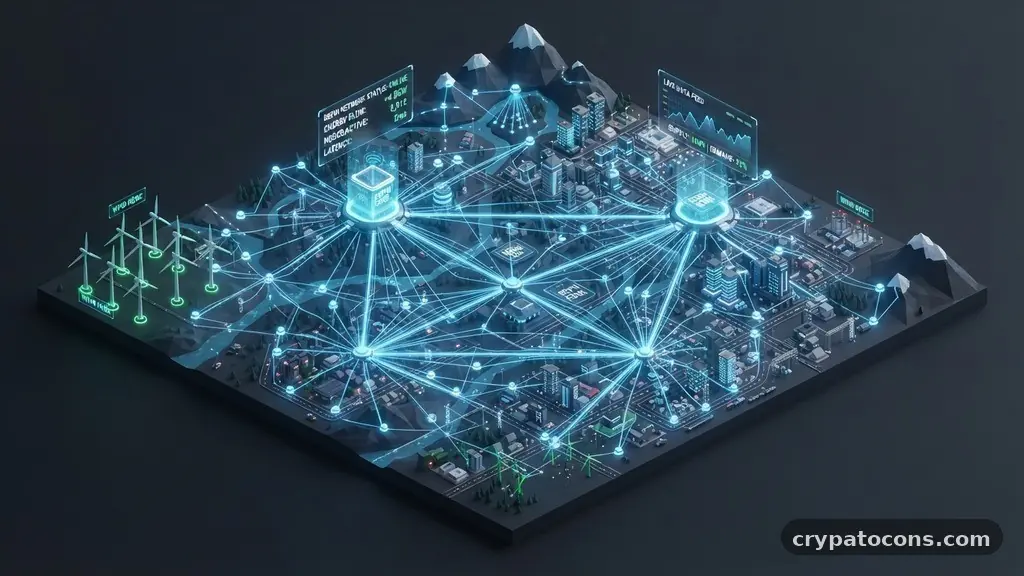
Decentralized Physical Infrastructure Networks, or DePIN in crypto, represent a shift in how we build and maintain real-world systems. Instead of relying on centralized corporations to deploy hardware like servers, sensors, or routers, these projects leverage blockchain technology to incentivize individual participation.
By rewarding users for contributing resources, these networks aim to lower costs and increase efficiency across global infrastructure. Understanding how this ecosystem functions is essential for anyone looking to grasp the future of digital and physical integration.
DePIN in crypto is a framework where blockchain protocols coordinate the deployment and operation of physical infrastructure through tokenized incentives. In traditional models, a massive telecommunications company must spend billions to lay fiber-optic cables or install cell towers across a country.
DePIN flips this model by allowing individual users to purchase, install, and manage their own hardware nodes. These nodes contribute to a shared network, and in exchange, the participants earn tokens as compensation for the utility they provide.
The core mechanism relies on a “flywheel” effect that drives growth. As more users provide hardware, the network becomes more useful and expansive, which often increases the value of the network’s native token.
Higher token prices attract more participants, further strengthening the infrastructure. This cycle allows decentralized projects to compete with established giants by utilizing the collective power of a distributed community rather than a central board of directors.
| Feature | Traditional Infrastructure | DePIN Model |
|---|---|---|
| Ownership | Centralized Corporation | Distributed Community |
| Capital Expenditure | High (Upfront cost) | Low (Crowdsourced hardware) |
| Maintenance | Internal Staff | Incentivized Node Operators |
| Scalability | Slow and Expensive | Rapid and Distributed |
How Decentralized Infrastructure Works
At the heart of any project involving DePIN in crypto is the concept of a hardware node. This is a physical device that performs a specific task, such as verifying data, routing internet traffic, or storing files.
A user acquires the hardware, connects it to the internet, and registers it on the blockchain. Once the device is live, it begins providing service to the network, and the protocol automatically tracks this performance.
The blockchain acts as the accounting layer for the entire system. It records how much work each node has performed without requiring a central administrator to oversee the process.
Smart contracts handle the distribution of rewards, ensuring that users are paid accurately and promptly based on the quality of their contribution. This transparency creates a trustless environment where participants don’t need to rely on a company’s promise of payment.
Security is maintained through cryptographic proofs that verify the node is actually doing the work it claims to perform. For example, a storage node must prove it holds a specific file fragment, while a wireless node must demonstrate it is providing connectivity to a specific geographic location.
If a node fails to provide the service, it stops receiving rewards, which encourages high uptime and reliability. This self-regulating system helps maintain the network’s integrity without constant oversight.
Primary Categories of Decentralized Networks
The scope of these projects is quite broad, touching on several different types of utility. While some focus on computing power, others prioritize connectivity or sensor data. The diversity of these applications shows how versatile blockchain technology can be when applied to tangible hardware.
- Wireless Networks: Projects that provide decentralized 5G or Wi-Fi coverage by incentivizing users to run small-scale hotspots.
- Decentralized Storage: Systems that allow users to rent out unused hard drive space for encrypted data hosting.
- Computing Power: Networks that aggregate the GPU or CPU capacity of thousands of home computers to support AI training or rendering tasks.
- Sensor Networks: Distributed systems that collect environmental data, such as air quality or traffic patterns, through community-owned devices.
- Energy Grids: Peer-to-peer systems that allow neighbors to trade renewable energy generated from home solar panels.
Each category operates with slightly different technical requirements. A storage network, for instance, requires high-speed internet and reliable hardware, while a sensor network might operate on low-power, long-range radio signals. The common thread is that the community provides the physical assets, and the token economy aligns the interests of the providers with the needs of the end-users.
The Role of Token Incentives
Tokens are the lifeblood of these networks because they solve the “cold start” problem. It is notoriously difficult to convince people to buy hardware for a network that doesn’t yet have many users.
By offering tokens that can potentially appreciate in value, these projects create a financial incentive for early adopters to take a risk. These tokens also serve as a utility within the ecosystem, often used to pay for the services provided by the network.
When a project is in its early stages, the token rewards are usually higher to compensate for the uncertainty and lack of network utility. As the network matures and gains more users, the reward structure often shifts to focus on long-term sustainability.
This transition is crucial for preventing the token supply from inflating too quickly and devaluing the project. Proper tokenomics are the difference between a project that thrives and one that fades away.
The market value of these tokens often reflects the utility of the network. If a decentralized storage project becomes the cheapest and most reliable way to store data, more businesses will use it.
This demand creates buy pressure on the token, which in turn makes running a node more profitable. It is a feedback loop that rewards those who contribute to the network’s growth and success.
Benefits Over Traditional Models
One of the most significant advantages of this model is cost efficiency. Traditional infrastructure companies have massive overhead, including administrative staff, real estate, and marketing departments.
DePIN projects strip away most of this because the community handles the deployment and maintenance of the hardware. This allows them to offer services at a fraction of the cost of traditional providers.
Another benefit is censorship resistance and resilience. In a centralized system, a single point of failure—like a data center outage or a government intervention—can take down the entire service.
A decentralized network is distributed across thousands of locations globally. If one node goes offline, the network automatically reroutes traffic to other nodes, ensuring the service remains active.
Furthermore, these networks promote a more equitable distribution of wealth. In the traditional telecommunications or cloud storage industry, the profits flow exclusively to shareholders and executives.
In a decentralized project, the value is returned to the people providing the actual infrastructure. This creates a more democratic system where anyone with an internet connection and a small hardware investment can participate in the value creation.
Challenges and Risks to Consider
Despite the potential, there are real hurdles that every participant should weigh carefully. Hardware costs can be a significant barrier to entry, especially for projects that require specialized, high-performance equipment.
If the price of the native token drops, it may take a long time to recoup the initial investment. This makes running a node a business decision that carries genuine financial risk.
Technical complexity is another factor that can deter mainstream adoption. Setting up a node often requires a moderate level of technical skill, such as configuring routers, managing digital wallets, or troubleshooting connectivity issues.
While many projects are working on making the setup process more user-friendly, the current state of the technology still favors those with some technical aptitude. If a project is too difficult to join, it will struggle to scale to the masses.
Regulatory uncertainty also looms over the space. Because these projects involve hardware that interfaces with the physical world, they must navigate local laws regarding telecommunications, data privacy, and energy distribution.
A project that works well in one country might face legal challenges in another. It is important to look for projects that are proactively addressing these compliance issues and operating with transparency.
Real-World Examples of Network Growth
Several projects have already made significant strides in proving that the DePIN model works at scale. For instance, projects in the wireless space have successfully deployed tens of thousands of hotspots globally, providing coverage in areas that traditional carriers ignored. These hotspots allow users to earn rewards simply by providing internet connectivity to their local community.
Another area seeing rapid development is decentralized storage. By turning individual hard drives into a global, encrypted cloud, these projects provide a competitive alternative to centralized providers. Users benefit from lower costs and the assurance that their data is stored in a distributed manner, making it much harder for a single entity to access or delete it.
The growth of AI has also fueled demand for decentralized computing networks. Training large language models requires massive amounts of GPU power, which is currently expensive and difficult to rent from centralized providers.
By aggregating the power of home computers, these projects are making AI training more accessible and affordable for developers. You can learn more about the technical foundations and broader impact of these systems by visiting the IEEE official website, which covers many of the engineering challenges involved in distributed systems.
Future Outlook for Infrastructure
The future of this sector will likely be defined by a move toward better hardware integration and simpler user experiences. As projects mature, we will likely see “plug-and-play” hardware that requires almost no technical knowledge to operate. This will lower the barrier to entry and allow the average consumer to participate in the network.
We should also expect to see more integration between different types of networks. For example, a storage node might eventually also act as a wireless relay, allowing users to earn rewards for multiple services simultaneously.
This efficiency will make the economics of running a node even more attractive. As these systems become more efficient, they will start to challenge the dominance of legacy infrastructure providers in a more meaningful way.
Ultimately, the success of these projects will depend on their ability to solve real-world problems better than existing alternatives. It is not enough to simply be “decentralized.”
The service must be fast, reliable, and affordable for the end-user. As the technology continues to evolve, we will see whether these networks can deliver on their promise of a more open and efficient global infrastructure.
Frequently Asked Questions
Is investing in DePIN projects considered risky?
Yes, like any crypto-related investment, there are significant risks involved. The value of tokens can be volatile, and the hardware you purchase for a network may become obsolete or unprofitable if the project fails to gain traction. Always conduct thorough research and never invest more than you can afford to lose.
How do I start participating in a network?
To start, you typically need to research a project, understand its hardware requirements, and purchase the necessary device. Once you have the hardware, you will need to follow the project’s official documentation to set up your node and connect it to the blockchain. Most projects have detailed guides on their official websites to help you through the process.
What happens if the token price crashes?
If the token price drops significantly, the profitability of your node may decline or even become negative. This is a common risk for early participants in any decentralized network. Many node operators decide to hold their tokens in hopes of a future recovery, while others may choose to shut down their equipment to stop incurring electricity or operational costs.
Are these projects truly decentralized?
The level of decentralization varies from project to project. Some are highly decentralized with thousands of independent operators, while others may still rely on a central foundation to manage software updates or hardware distribution. It is important to examine the project’s governance structure to understand how much control is actually in the hands of the community.
Can I run a node on a standard laptop?
It depends on the project. Some networks, especially those focused on storage or computing, may require specific hardware like high-capacity hard drives or powerful GPUs. Other projects, such as sensor networks, might use very low-power devices that are inexpensive and easy to set up. Always check the specific hardware requirements before making a purchase.
Summary and Next Steps
Navigating the world of DePIN in crypto provides a unique perspective on how technology can reorganize physical infrastructure. By shifting the burden of hardware deployment from large corporations to a community of individual participants, these projects offer a path toward more resilient and cost-effective systems. The key to engaging with this space is a focus on long-term utility rather than short-term price movements.
If you are interested in exploring this sector further, start by identifying a project that aligns with your interests, whether that is wireless connectivity, storage, or computing power. Read their official documentation, understand their tokenomics, and look for active, transparent developer communities.
Engaging with the community on forums can provide valuable insights into the challenges and opportunities of a specific project. By staying informed and cautious, you can better understand the potential of this evolving landscape.