How Do Crypto Bridges Work?
Understanding how do crypto bridges work is essential for anyone looking to move assets between independent blockchain networks. These protocols serve as the connective tissue for a fragmented ecosystem, allowing tokens to travel from one environment to another. By learning the mechanics behind this process, you gain the ability to navigate decentralized finance with greater confidence and efficiency.
Whether you are moving liquidity to explore new yield farming opportunities or simply diversifying your holdings across different chains, knowing the underlying technical architecture ensures you can manage your digital portfolio effectively. This article breaks down the complex systems that make cross-chain interoperability a reality for modern investors.
The Core Mechanism of Token Bridging
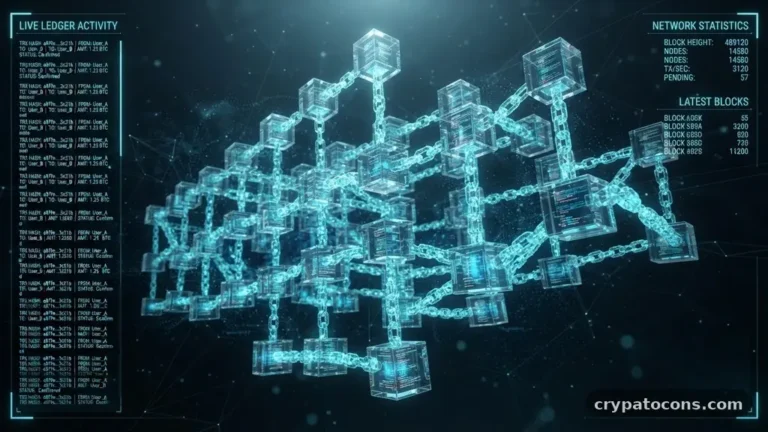
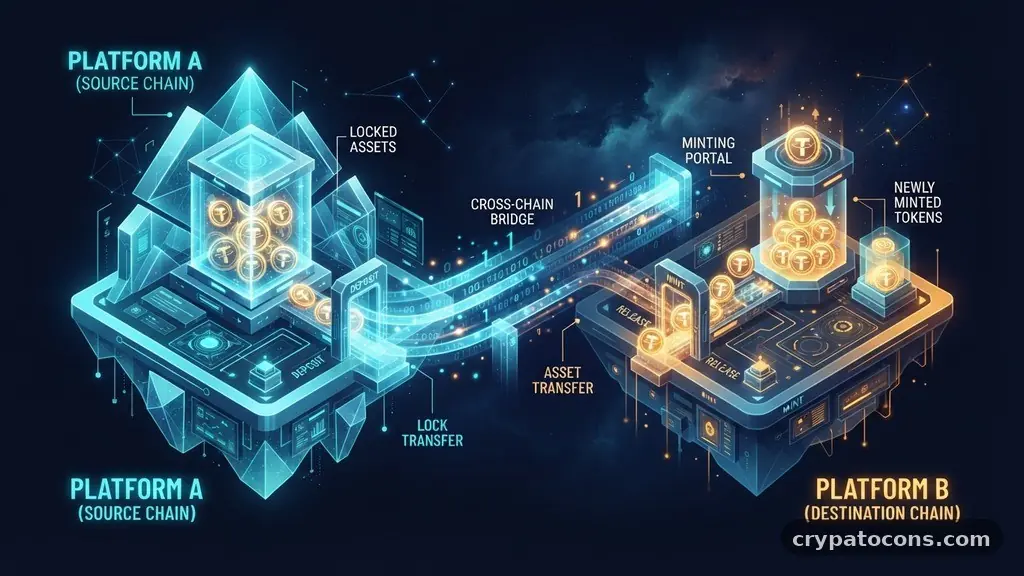
At their most fundamental level, these protocols function by creating a synthetic representation of an asset on a destination chain. When you initiate a transfer, the original tokens are typically locked in a smart contract on the source blockchain. Once the protocol confirms this deposit, an equivalent amount of wrapped tokens is minted on the target network.
This process ensures that the total supply remains consistent, preventing the creation of value out of thin air. The bridge acts as a neutral intermediary, maintaining the peg between the locked collateral and the minted derivative.
Without this locking and minting mechanism, it would be impossible for a token native to Ethereum to interact with the high-speed environment of Polygon or other layer-two solutions. The smart contract on the source side serves as a vault, holding the original assets securely until you decide to reverse the process. When you bridge back, the synthetic tokens are burned, and the contract releases the original assets from the vault.
This ensures that the value remains tethered to the underlying blockchain’s security model. It is a system built on mathematical proofs rather than human trust.
The Role of Smart Contracts in Verification
Smart contracts provide the automated logic that dictates how do crypto bridges work in real-time. These pieces of code act as the gatekeepers, checking that a transaction on the source chain has actually occurred before releasing funds on the destination chain. Because blockchains cannot communicate directly, they rely on these contracts to listen for specific events.
When a deposit event is detected, the contract triggers the minting function automatically. This removes the need for manual approval, making the transfer of assets much faster.
Security remains the primary focus when developers build these contracts. A bug in the code can result in a loss of funds, which is why most reputable platforms undergo rigorous audits. The logic must be flawless, ensuring that the number of tokens entering the bridge matches the number of tokens exiting.
Furthermore, the contracts must handle edge cases, such as network congestion or failed transaction attempts. By relying on deterministic code, these bridges provide a reliable way to move value without needing a centralized exchange to act as a custodian.
Common Architectures for Cross-Chain Interaction
There are several ways to design a connection between two different networks. The most common approach is the Lock-and-Mint model, which we have already touched upon. However, some platforms prefer a Burn-and-Mint model, which is often used for native assets that can be destroyed on one chain to be recreated on another.
This approach avoids the issue of having massive amounts of liquidity locked in a single contract, which can sometimes become a target for hackers. Each design has its own set of trade-offs regarding speed, cost, and security.
Another architecture involves liquidity pools, where the bridge holds a balance of both native and wrapped assets on both sides of the connection. Instead of locking your tokens, the bridge simply swaps your source-chain tokens for the target-chain tokens from its internal pool. This is often faster because it doesn’t require waiting for a minting process to conclude.
It does, however, require the platform to maintain enough liquidity to facilitate large transactions. Below is a comparison of these common bridge types.
| Architecture | Primary Mechanism | Speed |
|---|---|---|
| Lock-and-Mint | Collateral held in vault | Moderate |
| Burn-and-Mint | Asset destroyed/recreated | Fast |
| Liquidity Pool | Direct asset swapping | Near-instant |
Managing Security Risks and Trust
The biggest challenge in the world of bridging is the inherent risk of centralization. Many systems rely on a set of “relayers” or “validators” to signal that a transaction has occurred. If these validators are controlled by a small group, they could theoretically collude to drain the bridge’s reserves.
This is why many decentralized projects are moving toward multi-signature or decentralized oracle systems. You should always research the validator set of any platform you use to ensure it aligns with your risk tolerance.
Users often ask how they can minimize their exposure to these risks. The best practice is to stick with established protocols that have a track record of reliability and transparency. You can learn more about these standards through resources like the official Ethereum documentation on bridging, which outlines the security considerations for cross-chain movement.
Diversifying your bridging activity across multiple platforms can also limit your potential losses. Never bridge more than you are comfortable losing, as the technology is still evolving.
The Evolution of Interoperability Standards
As the ecosystem grows, the industry is shifting toward standardized messaging protocols. Instead of building custom bridges for every pair of blockchains, developers are creating universal layers that allow any chain to talk to any other chain. This is the next frontier of how do crypto bridges work, as it reduces the fragmentation of liquidity.
By creating a common language for blockchains, these protocols make it easier for dApps to operate across multiple environments. You no longer need to worry about which bridge is compatible with which specific token.
These universal protocols often use decentralized networks of nodes to verify messages. This creates a more robust security model because the network of nodes is distributed globally. As these standards become more widely adopted, we will likely see fewer specialized bridges and more integrated cross-chain experiences.
This will ultimately benefit the user by lowering fees and increasing the speed of transactions. We are moving toward a future where the distinction between chains becomes invisible to the average person.
Factors Influencing Transaction Costs
When you move assets, you are essentially paying for the computation required to verify your transaction on two different networks. This is why bridging can sometimes be expensive, especially during times of high network activity.
Each bridge sets its own fee structure, which covers the gas costs for the validators and the protocol’s own operational expenses. It is helpful to check the estimated gas fees on both the source and destination chains before you confirm your transaction.
Transaction times are also impacted by the finality requirements of the blockchains involved. Some chains require more confirmations than others to ensure that a transaction cannot be reversed. This adds a delay that is outside of the bridge’s control.
If you are in a rush, look for bridges that support chains with faster finality times. Keep in mind that speed and cost are usually inversely related; faster transactions often command higher premiums.
Popular Assets Moved Across Chains
Most bridging activity involves stablecoins and blue-chip assets. Because these tokens represent significant value, they are the primary targets for cross-chain movement.
Users frequently move assets like USDC, USDT, or wrapped versions of ETH to participate in decentralized lending or yield farming on smaller, more efficient networks. By moving these assets, they can put their capital to work in environments that offer higher returns or better user interfaces.
* Stablecoins: The most common assets moved to maintain value across ecosystems.
* Governance Tokens: Often bridged to participate in DAO voting on secondary networks.
* Wrapped Bitcoin/Ethereum: Bridged to access DeFi protocols on chains like Solana or Avalanche.
* NFTs: Increasingly being bridged as cross-chain standards for digital collectibles emerge.
The liquidity of these assets is what makes the ecosystem functional. Without the ability to move stablecoins, DeFi would remain siloed within its native blockchain, stifling innovation. As more protocols support native cross-chain asset transfers, the friction associated with moving these assets will continue to decrease.
Future Trends in Decentralized Bridging
Looking ahead, the focus is shifting toward “trustless” bridges that remove the human element entirely. These systems use advanced cryptography, such as Zero-Knowledge proofs, to verify transactions without needing a third-party validator set.
This is the gold standard for security, as it relies on the mathematical properties of the blockchains themselves. While these solutions are more complex to build, they represent the future of how do crypto bridges work.
Another trend is the integration of bridging directly into wallet interfaces. Instead of visiting a separate website, you will be able to swap assets between chains with a single click inside your browser extension. This user-friendly approach will make cross-chain movement accessible to a much broader audience.
As the technology matures, it will become as routine as sending an email. The era of complex, manual bridging will soon be a memory of the early crypto days.
Frequently Asked Questions
Is it safe to use a bridge?
While many bridges are secure, they are not risk-free. You should always verify that the protocol you are using has been audited by a reputable security firm and that it has a history of successful operations.
How long does a bridge transfer usually take?
Transfer times vary based on network congestion and the specific architecture of the bridge. Some transactions happen in seconds, while others may take up to an hour if the network requires a high number of confirmations for finality.
Why are gas fees so high on some bridges?
Gas fees are determined by the demand for space on the underlying blockchains. When you bridge, you are triggering transactions on both the source and target chains, meaning you pay for the computational cost of both networks simultaneously.
Can I bridge any token I want?
Not every token is supported by every bridge. Most platforms focus on high-liquidity assets like stablecoins and major native coins. You should check the bridge’s supported asset list before attempting a transfer to ensure your specific token can be moved.
What happens if my transaction gets stuck?
If a transaction hangs, it is usually due to network congestion or an error in the smart contract interaction. Most reliable bridges have a “retry” function or a support ticket system to help you recover your assets if they become stranded in the bridge contract.
Concluding Thoughts
Navigating the world of cross-chain movement is a vital skill for any active participant in the digital asset space. By understanding how do crypto bridges work, you are better equipped to manage your capital across the entire blockchain ecosystem.
We have explored the mechanics of locking and minting, the importance of secure smart contract design, and the emerging trends that promise a more connected future. The technology is advancing rapidly, shifting away from manual, high-risk processes toward automated and cryptographically secure solutions.
As you continue to explore different networks, remember to prioritize security and stay informed about the specific protocols you choose to use. Taking the time to double-check your transactions and choosing reputable platforms will keep your assets safe.
The future of finance is increasingly interconnected, and bridges are the infrastructure that will make that vision a reality. Stay curious, keep learning, and enjoy the flexibility that comes with mastering cross-chain technology.