What Is a Layer 2 Blockchain?
Understanding a Layer 2 blockchain requires looking at the limitations of base networks. While original chains provide the foundation for decentralization, they often struggle with slow speeds and high costs during peak demand. A Layer 2 solution sits on top of these networks to handle activity more efficiently.
By processing data off the main chain and then reporting back, these systems drastically improve user experience. You will gain a clearer picture of how these protocols function, why they matter for mass adoption, and the specific technologies that make them work in the modern digital economy.
Defining the Role of Layer 2 Protocols
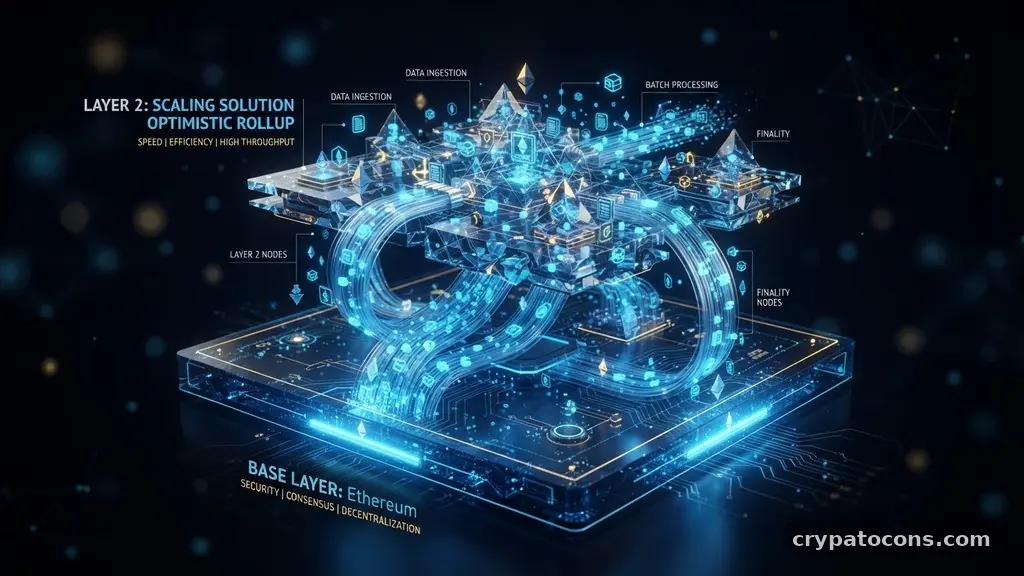
A Layer 2 blockchain acts as a secondary framework built on top of an existing primary network, which we call Layer 1. Think of the primary network as the base layer—the foundation responsible for security and final settlement.
Layer 1 chains, such as Ethereum or Bitcoin, are highly secure but often limited by the sheer volume of transactions they can process per second. When too many people use the network at once, congestion occurs, and fees spike.
Layer 2 protocols solve this by executing transactions away from the main chain. They take the heavy lifting of processing and computation and move it to a side environment.
Once the transactions are bundled, the Layer 2 system sends a summary or a proof back to the base layer. This ensures the security of the main chain remains intact while offloading the traffic.
This separation of concerns is the key to scalability. By reducing the number of operations the main chain must verify, the entire ecosystem becomes faster and cheaper for the average user.
Developers can build complex applications that would otherwise be too expensive to run directly on the base layer. It transforms the potential of a blockchain from a niche academic project into a practical tool for daily digital interaction.
The Mechanics of Scaling Solutions
Scaling solutions operate by changing how data is handled before it ever touches the main ledger. The most common method involves batching thousands of transactions into a single data packet.
Instead of the main chain verifying each individual trade or transfer, it only needs to verify the authenticity of the entire batch. This drastically reduces the computational burden on the base layer nodes.
Another core component is the use of cryptographic proofs. These proofs verify that all transactions within a batch are valid without needing to reveal every single detail of each transaction.
This maintains privacy while ensuring that the system remains honest and transparent. If any part of the batch is invalid, the entire submission is rejected by the main chain.
These mechanisms allow for a much higher throughput than what is possible on the base layer alone. While a standard network might handle a limited number of operations, a Layer 2 implementation can theoretically scale to thousands of transactions per second. This capacity is essential for applications that require high frequency, such as decentralized finance platforms or gaming ecosystems.
Understanding Rollups and Their Impact
Rollups are the most prominent type of Layer 2 technology today. They effectively “roll up” or bundle transaction data and post it to the main chain.
There are two primary varieties of rollups: Optimistic and Zero-Knowledge (ZK). Each takes a different approach to proving that the transactions are correct.
Optimistic rollups assume that all transactions are valid by default. They allow a window of time for anyone to submit a challenge if they believe a fraudulent transaction occurred.
If no challenge is raised within that period, the batch is finalized on the main chain. This is a highly efficient way to process data because it minimizes the work required for constant verification.
Zero-Knowledge rollups, by contrast, use complex math to provide a cryptographic proof of validity for every batch. These proofs, known as ZK-SNARKs or ZK-STARKs, mathematically guarantee that the state of the network is correct. Because the main chain can verify these proofs almost instantly, they offer faster finality than their optimistic counterparts.
| Feature | Optimistic Rollups | Zero-Knowledge Rollups |
|---|---|---|
| Validation Method | Fraud Proofs | Validity Proofs |
| Withdrawal Speed | Slower (Challenge Period) | Faster (Instant) |
| Complexity | Lower | Higher |
| Primary Benefit | Compatibility | High Security |
Why Security Remains the Top Priority
A common concern involves whether moving transactions off-chain weakens the overall security of the system. It is important to realize that a Layer 2 blockchain does not operate in a vacuum.
It relies on the underlying Layer 1 for its ultimate security guarantees. If the Layer 2 network were to experience technical issues, the assets remain protected by the immutable nature of the base layer.
The base layer acts as the court of final appeal. If a user feels that a transaction was processed incorrectly on the Layer 2, they can use the cryptographic data to challenge that state on the main chain.
This relationship ensures that the security budget of the entire network is inherited by the secondary layers. You are not sacrificing trust to gain speed.
Developers are also implementing decentralized sequencers to further strengthen these systems. A sequencer is responsible for ordering transactions within a rollup.
By decentralizing this role, the network avoids the risk of a single point of failure or censorship. This architecture ensures that the benefits of decentralization are preserved, even as the network achieves massive scale.
The Ecosystem of Layer 2 Networks
The growth of Layer 2 networks has created a vibrant landscape of specialized chains. Many projects are now building tailored environments for specific use cases like decentralized exchanges or high-performance gaming.
This modular approach allows for better optimization of the underlying technology. For more detailed technical specifications, you can review the official documentation on Ethereum scaling.
Some networks focus on extreme low-cost transfers to support micro-transactions. Others prioritize developer tools to make it easier to migrate existing applications from the main chain.
This diversity of choice is a healthy sign for the industry. It means that builders can select the environment that best fits their specific project requirements.
This evolution has also led to better cross-chain communication. Users can now move assets between different Layer 2 systems with relative ease.
This interoperability is crucial for a unified digital economy where value can flow freely across various protocols. It is no longer just about one chain, but about a network of interconnected environments.
Key Differences Between Layer 1 and Layer 2
Distinguishing between these layers helps clarify why the industry needs both. Layer 1 is the sovereign, independent core.
It sets the rules, handles the consensus, and ensures the network can survive even if parts of the infrastructure go down. It is the bedrock of the entire system.
Layer 2 is the efficiency engine. It is designed for high-frequency interaction and user-facing applications.
While it doesn’t need to be as “heavy” or decentralized as the base layer, it must remain transparent and verifiable. By keeping these two roles separate, the ecosystem avoids the “trilemma” of having to choose between security, speed, and decentralization.
* Layer 1: High security, slower transaction speeds, higher costs, base consensus.
* Layer 2: Lower costs, faster speeds, off-chain computation, inherits base security.
* Layer 3: Application-specific chains built on Layer 2 for even more specialized performance.
This multi-layered approach is similar to how the internet works. You have the core internet protocols (TCP/IP) at the bottom, and then layers of application software built on top. Just as you wouldn’t expect the base internet protocol to handle the graphics of a video game, you don’t expect the base blockchain to handle every micro-interaction.
Common Misconceptions About Scaling
Many people mistakenly believe that Layer 2 networks are just “sidechains” that sacrifice security. A sidechain is a separate blockchain that runs in parallel and uses its own consensus mechanism.
If a sidechain’s nodes fail or act maliciously, the assets on that chain are at risk. A true Layer 2, however, is anchored to the main chain and uses its security to validate its data.
Another myth is that these layers are only for advanced users or developers. In reality, modern wallets and interfaces make the transition between layers invisible.
You might be using a Layer 2 network right now without even realizing it. The interface simply shows your balance and transaction history, while the background tech handles the routing.
Finally, some suggest that these layers will eventually replace the main chain. This ignores the vital role that the base layer plays in settling disputes and maintaining the root of trust for the entire system. The two layers are symbiotic; the main chain needs the scale of the secondary layers to reach mass adoption, and the secondary layers need the main chain to provide a secure, immutable foundation.
Frequently Asked Questions
Is a Layer 2 blockchain a separate cryptocurrency?
No, a Layer 2 network typically uses the native token of the base layer for transaction fees. While some Layer 2 projects have their own governance tokens, the actual gas or service fees are usually paid in the primary asset of the underlying chain, such as ETH.
Do I need a special wallet to use these networks?
Most modern, reputable crypto wallets support Layer 2 networks by default. You may need to toggle a setting or add a network configuration, but you do not need to create a completely new wallet or store your funds in a different way.
Can I lose my funds if the Layer 2 network goes down?
Because Layer 2 solutions are designed to be anchored to the main chain, your funds are generally safe. Even if the secondary network experiences an outage, you can typically use the base layer to recover your assets, provided you have your private keys.
Are all Layer 2 solutions the same?
No, there are significant differences between them. Some prioritize speed, others focus on privacy, and some are designed specifically for gaming or finance. It is important to research the specific architecture and security model of each project.
How do I move my assets to a Layer 2?
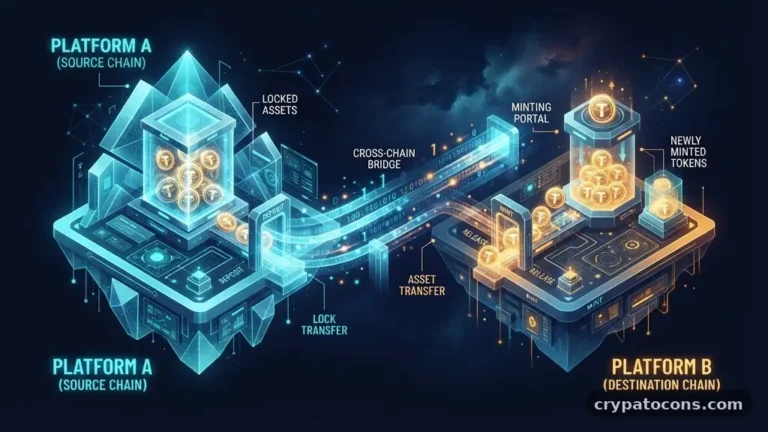
You move assets using a “bridge.” A bridge is a smart contract that locks your tokens on the main chain and mints an equivalent amount on the Layer 2 network. When you want to move back, you “burn” the tokens on the Layer 2 to unlock them on the main chain.
Looking Ahead at Scaling Progress
The development of a Layer 2 blockchain architecture has fundamentally changed how we interact with decentralized systems. By offloading computation and focusing on batch processing, these networks have successfully lowered the barrier to entry for millions of users. As the technology continues to mature, we can expect even better performance and more intuitive user experiences.
The future of the digital economy rests on the ability of these layers to work together seamlessly. As more applications move to these environments, the overall network becomes more resilient and more capable of handling global-scale activity.
If you are interested in exploring this space further, start by interacting with a few decentralized applications on a popular Layer 2 network. You will likely find that the speed and cost efficiency are a significant improvement over traditional base-layer transactions.