
What Is a Crypto Bridge?
Understanding what a Crypto Bridge actually does is essential for anyone moving beyond a single blockchain. At its core, a Crypto Bridge acts as a digital tunnel between two separate ecosystems, allowing you to move assets from one environment to another. Without these tools, tokens would remain trapped on their native networks, unable to interact with decentralized finance platforms or NFT marketplaces elsewhere.
By learning how these protocols function, you gain the freedom to explore diverse opportunities across the entire web3 space while maintaining control over your holdings. This article explains the mechanics, risks, and practical applications of these vital tools to help you move your funds with confidence.
How a Crypto Bridge Functions
A Crypto Bridge operates by creating a connection between two distinct blockchains that would otherwise be unable to communicate. You can think of it as a currency exchange booth situated at the border of two countries.
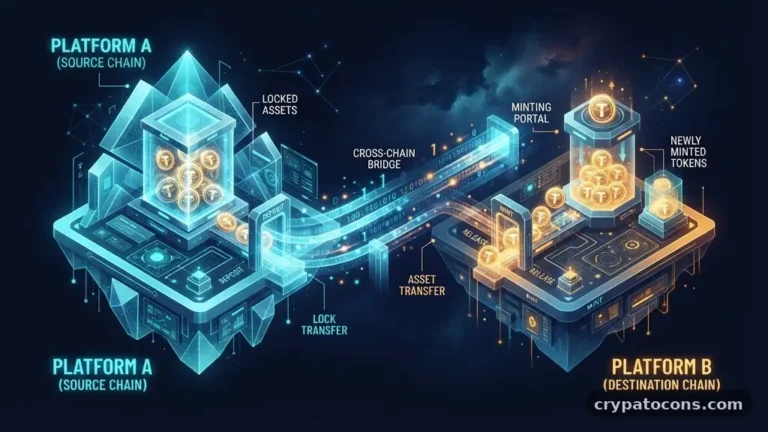
When you send your tokens to a bridge, the protocol typically locks your original assets in a smart contract on the source chain. Once the contract confirms the deposit, it issues a corresponding amount of “wrapped” tokens on the destination chain.
These wrapped tokens represent the value of your original holdings on a one-to-one basis. Because the original tokens are held in escrow, the synthetic version remains pegged to the value of the asset you sent.
If you want to move your assets back, you simply reverse the process. You send the wrapped tokens back to the bridge, which then destroys them and releases your original tokens from the locked contract.
This mechanism allows you to utilize assets like Ethereum on faster, cheaper networks like Polygon. It opens up liquidity and enables you to participate in decentralized applications that exist only on specific chains. Without this cross-chain capability, the ecosystem would be severely fragmented and far less useful for the average user.
The Mechanism of Asset Wrapping
The concept of “wrapping” is the technical foundation of most cross-chain bridges. When you move an asset from one network to another, the bridge doesn’t actually teleport your digital coins across the internet. Instead, it manages a ledger that tracks the movement of value between two separate, independent databases.
The process relies heavily on smart contracts to ensure fairness and security. When you deposit your tokens, the smart contract acts as an automated custodian that cannot be bribed or influenced by outside parties. This trustless environment is what makes these bridges popular among users who prioritize decentralized finance principles.
However, the specific implementation can vary significantly depending on the project. Some bridges use a “lock and mint” approach, where they lock the source asset and mint a new version on the target chain.
Others use a “burn and mint” model, which permanently removes the token from the source chain and recreates it elsewhere. Both methods aim to maintain the total supply of the asset across all connected networks.
Comparing Common Bridge Models
Not all bridges operate with the same underlying architecture or security assumptions. Developers often choose between centralized, federated, or trustless designs based on the needs of their specific community. Understanding these differences helps you identify which tools might be safer for your personal use.
| Bridge Type | Mechanism | Security Level |
|---|---|---|
| Trusted/Centralized | Custodial service | Lower; requires trusting a central entity |
| Federated | Multi-signature group | Medium; relies on a small group of validators |
| Trustless | Smart contract code | Higher; relies on decentralized math |
Trusted bridges are often the easiest to use but introduce the risk of human error or malicious intent by the operators. Trustless bridges, while safer in principle, are often more complex to interact with and might involve higher gas fees. Most users find that a balance between convenience and security is the best way to move assets between networks.
Why Bridges Are Necessary
Blockchain networks are designed to be sovereign and independent, which is a strength for security but a challenge for interoperability. Ethereum, for example, has a massive ecosystem but can experience high transaction costs during periods of congestion. Other networks like Polygon or Solana offer faster speeds, but they don’t natively support Ethereum-based tokens.
A Crypto Bridge solves this by acting as a bridge between these islands of data. It allows you to take advantage of the strengths of different blockchains without having to sell your assets and buy new ones. This process saves you significant money on transaction fees and avoids potential tax events.
Additionally, bridges are the backbone of the multi-chain future. As more specialized chains emerge, the ability to move liquidity seamlessly will become the primary way users interact with the internet of value. Without these conduits, the vision of a connected, decentralized web would be impossible to achieve.
Common Risks and Security Considerations
Security is the most significant concern when you use a cross-chain protocol. Because bridges hold large amounts of liquidity, they are often prime targets for hackers looking to exploit bugs in smart contract code. A single vulnerability in the bridge’s code can result in the loss of all assets held in its escrow vault.
You should always look for projects that have undergone multiple audits by reputable firms. While an audit does not guarantee safety, it does indicate that independent experts have reviewed the code for common mistakes. It is also wise to check if the project has a bug bounty program, which incentivizes ethical hackers to find and report vulnerabilities before they are exploited.
Beyond code risk, there is also the risk of “de-pegging.” If the bridge loses its ability to back the wrapped tokens, the value of those tokens on the destination chain could drop to zero. Always verify the status of the bridge you are using before moving large sums of money.
Popular Use Cases for Bridging
Most people start using bridges when they want to chase higher yields in decentralized finance. A common strategy involves moving stablecoins from the Ethereum mainnet to a lower-fee chain to participate in liquidity pools. By doing this, you can earn rewards without paying the high gas fees associated with the Ethereum network.
Another popular use case is the transfer of non-fungible tokens. While moving an NFT between chains is technically more difficult than moving a fungible token, some specialized bridges facilitate this process. This allows collectors to showcase their assets on platforms that offer better user experiences or lower costs for listing and trading.
Finally, gamers use these tools to move in-game currency or items between different gaming-focused blockchains. As blockchain gaming grows, the ability to take your assets from one game to another will become a standard feature of the industry. This interoperability is what makes digital ownership feel real to the average player.
Selecting a Reliable Protocol
Choosing the right tool is just as important as knowing how it works. You should prioritize platforms that have a long track record and high total value locked, as these are generally more battle-tested. You can find more information on the technical standards for these systems at the official Ethereum developer documentation.
When you are evaluating a new bridge, look for transparency in their documentation. A good project will clearly explain how they handle security, who manages the validators, and what happens in the event of an emergency. If a website is vague about these details, it is usually a sign to look for an alternative.
Consider the user experience as well. A well-designed interface will clearly show you the estimated fees, the expected time for the transaction to complete, and the contract addresses you are interacting with. If the interface feels clunky or confusing, it may lead to errors that could cost you your funds.
Frequently Asked Questions
Is it safe to use a bridge?
No bridge is 100% safe, as they are complex pieces of software that can contain vulnerabilities. You should only move what you are willing to risk and prioritize well-audited, established protocols to minimize your exposure.
How long does a bridge transaction take?
The time varies depending on the networks involved and the bridge’s architecture. Some transactions take only a few minutes, while others may take several hours if they require multiple confirmations on the source and destination chains.
Do I need to pay gas fees on both networks?
Yes, you typically need to pay transaction fees on the source chain to initiate the transfer and on the destination chain to finalize it. Always ensure you have enough native tokens on both networks before you begin.
What happens if a bridge gets hacked?
If the protocol’s smart contract is compromised, the assets held in the bridge’s vault are at risk. In many cases, this leads to the de-pegging of the wrapped tokens, meaning your holdings on the destination chain may lose their value.
Are there alternatives to using a bridge?
The main alternative is using a centralized exchange to sell your tokens on the source chain and buy them again on the destination chain. This method is often safer but may be subject to KYC requirements and higher trading fees.
Conclusion
Navigating the world of blockchain interoperability is a necessary step for any active user. By understanding what a Crypto Bridge provides, you gain the ability to move your assets across different networks, ensuring you aren’t stuck in one ecosystem. While these tools introduce specific risks, they are currently the only way to achieve true fluidity between independent chains.
Remember to prioritize security by researching the protocols you use and always staying vigilant about your wallet safety. As technology continues to evolve, we will likely see more secure and automated solutions that make this process even easier for everyone. Start with small amounts to test the waters, keep your software updated, and enjoy the expanded freedom that comes with a multi-chain experience.