What Is Account Abstraction in Crypto?
Understanding what is account abstraction in crypto is essential for anyone looking to bridge the gap between complex blockchain mechanics and everyday usability. At its core, this technology transforms standard wallets into programmable smart contracts, allowing for features like social recovery and gasless transactions. By shifting control from rigid private keys to flexible code, the ecosystem becomes significantly more accessible for newcomers.
This article breaks down how these smart accounts function, why they matter for mass adoption, and the technical standards driving this evolution. You will gain a clear perspective on how your digital assets are managed and protected in a modern, decentralized environment.
The Problem with Traditional Crypto Accounts
Most people currently interact with the blockchain through Externally Owned Accounts, or EOAs. These rely entirely on a pair of cryptographic keys: a public address for receiving funds and a private key for authorizing outgoing movements.
If you lose your private key, you lose access to your funds forever. There is no password reset feature, no help desk to call, and no way to reverse a mistaken transfer.
This rigid structure is a primary barrier for new users who are accustomed to modern banking security. Traditional banking allows for multi-factor authentication, account recovery, and dispute resolution.
EOAs offer none of these, forcing the user to become their own bank with zero margin for error. Managing a seed phrase written on a piece of paper is a high-stakes responsibility that scares away the average person.
Furthermore, EOAs are limited by their inability to execute complex logic. Every transaction must be signed manually by the private key holder, creating a friction-heavy experience.
You cannot bundle transactions, set spending limits, or automate recurring payments without relying on third-party custodial services. This lack of flexibility makes the current state of user experience feel like the early, clunky days of the internet.
How Account Abstraction Changes the Rules
Account abstraction in crypto fundamentally changes the nature of your wallet by turning it into a smart contract. Instead of a single key acting as the gatekeeper, the account itself can contain custom logic.
This allows developers to define exactly how an account should behave when it initiates a transaction. You are no longer tethered to the limitations of a standard cryptographic signature.
When a wallet becomes a smart contract, it can perform multiple operations in a single interaction. For example, a user could approve a token swap and execute the trade in one click.
This bundling reduces the number of signatures required, saving time and lowering the overall complexity of decentralized finance interactions. It essentially moves the complexity from the user’s brain to the wallet’s code.
This transition also enables programmable security features that were previously impossible. You could implement a system where a transaction requires two out of three signatures from different devices.
If one device is lost, the others can be used to recover access. This flexibility makes digital ownership feel much safer for institutional and individual participants alike.
The Role of ERC-4337
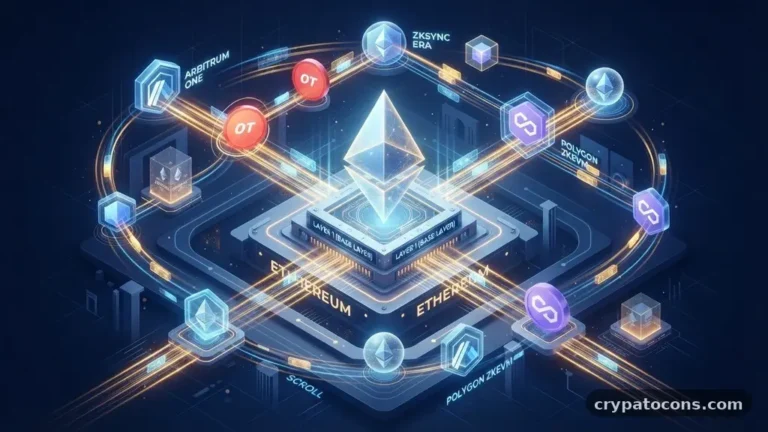
The technical foundation for this evolution is the Ethereum ERC-4337 standard. This proposal introduced a way to achieve account abstraction without requiring changes to the underlying consensus layer of the network.
It functions by creating a new, higher-level pseudo-transaction object called a UserOperation. These operations are bundled together by specialized actors known as bundlers.
Bundlers collect these user requests and submit them to the blockchain as a single transaction. This process allows the network to process multiple user interactions while maintaining the decentralization of the Ethereum mainnet.
By abstracting the transaction lifecycle, the protocol effectively separates the user’s intent from the technical signing process. This is the mechanism that makes features like gasless transactions possible.
Developers can now build applications that subsidize the cost of transactions for their users. Instead of needing ETH to pay for gas fees, a user could pay in a stablecoin or have the application provider cover the cost entirely. This removes a massive barrier to entry, as users no longer need to navigate the complexities of buying native tokens just to get started.
Key Benefits for Daily Users
The most immediate benefit of this shift is the implementation of social recovery mechanisms. If you lose your primary device, you can designate “guardians” who help you regain access to your account.
These guardians could be friends, family members, or even a hardware security module. This removes the fear of losing your entire net worth due to a misplaced seed phrase.
Another major advantage is the ability to set granular permissions on your account. You can create a “session key” that allows a game or a decentralized application to perform a limited number of actions on your behalf.
You no longer need to sign every single movement of assets within a trusted environment. This creates a much smoother experience for high-frequency interactions.
The following table outlines the differences between traditional wallets and smart accounts:
| Feature | Traditional EOA Wallet | Smart Account (Abstraction) |
|---|---|---|
| Recovery | Seed phrase required | Social recovery possible |
| Gas Payments | Must use native token | Pay in various tokens |
| Transaction Logic | Single signature only | Multi-sig and automation |
| Permissioning | All or nothing | Granular session keys |
Overcoming the Gas Fee Barrier
Gas fees have long been a point of contention for blockchain users. When you want to move funds or interact with a protocol, the cost fluctuates wildly based on network congestion.
For new users, managing these costs is a technical hurdle that feels unnecessary. They just want to use the application, not manage a volatile commodity market.
Account abstraction solves this by enabling paymasters to cover transaction costs. A paymaster is a smart contract that agrees to pay the gas fees on behalf of a user for specific transactions.
This allows businesses to offer a “free-to-use” experience during the onboarding phase. It shifts the financial burden from the end user to the service provider, which is a standard model in traditional tech.
This approach also allows for flexible fee payment options. Instead of being forced to hold the network’s native coin, users can pay gas fees using the assets they are already transacting with.
If you are sending a stablecoin, the smart account can automatically convert a portion of that balance to cover the network costs. This abstraction of payment makes the user journey significantly more intuitive.
Security Enhancements Through Custom Logic
Security is often cited as the biggest risk in the digital asset space. Traditional wallets are binary: if someone gets your key, they have total control.
Smart accounts allow for multi-signature configurations that require multiple approvals for high-value transactions. This adds a critical layer of defense against accidental loss or malicious compromise.
You can also implement spending limits on your wallet, similar to a daily limit on a credit card. If a malicious actor gains access to your session key, they can only drain up to a certain amount before the account requires a stronger, hardware-backed signature. This proactive security model is a major step forward for individual asset protection.
Additionally, smart accounts can be programmed to blacklist certain addresses or interactions. If your wallet is compromised, you can trigger a “freeze” function that prevents the attacker from moving your most valuable assets.
This level of control is simply impossible with standard EOAs. It transforms the wallet from a passive storage unit into an active, protective shield.
Future Outlook for Web3 Adoption
The transition toward smart accounts is arguably the most important milestone for widespread Web3 adoption. By hiding the technical complexity, developers can create applications that feel like standard web apps.
Users can log in with email or biometrics, and the underlying wallet logic handles the cryptographic heavy lifting. This is essential for bringing the next billion users into the ecosystem.
We are already seeing a wave of “smart wallets” that leverage these principles to offer a superior experience. These wallets allow for account recovery and batching of transactions without the user ever seeing a raw hex code.
As these tools mature, the distinction between a centralized exchange and a decentralized wallet will continue to blur. Users will get the security of non-custodial ownership with the convenience of a modern bank account.
The ecosystem is currently moving toward cross-chain compatibility for these features. Ideally, your smart account will function the same way across multiple blockchains, providing a unified experience.
This would allow users to move assets between chains without worrying about different wallet standards or gas tokens. The goal is a frictionless environment where the underlying infrastructure becomes invisible.
Common Questions About Smart Wallets
Can I convert my existing wallet to a smart account?
You cannot simply “upgrade” an existing EOA address to a smart account because they operate on different logic. You will typically need to create a new smart account and transfer your assets from your old wallet to the new address. Some services offer migration tools to simplify this process.
Is account abstraction more expensive to use?
Because smart accounts involve more complex code and require more data storage on the blockchain, they can be slightly more expensive in terms of gas fees. However, by batching multiple operations into a single transaction, the net cost per action often becomes lower than performing several individual transactions.
Are these accounts truly decentralized?
Yes, smart accounts are self-custodial, meaning you remain in full control of your private keys or recovery methods. The smart contract logic is immutable once deployed, ensuring that no third party can alter your account rules. You are simply using code to manage your assets rather than a basic cryptographic key pair.
Do I need to learn coding to set up these features?
No, you do not need to be a developer to benefit from this technology. Most modern wallets that utilize account abstraction provide a user-friendly interface that lets you toggle features like social recovery or gas payment options. The complexity is handled by the application developers behind the scenes.
Summary of Key Takeaways
Account abstraction in crypto represents a fundamental shift in how we interact with digital assets. By moving away from rigid key-based security toward flexible, programmable smart contracts, the industry is finally addressing the usability issues that have hindered mass adoption. Users now have access to features like social recovery, gasless transactions, and transaction bundling, all of which mirror the convenience of traditional finance.
While the technology is still evolving, the move toward ERC-4337 and similar standards is clearly setting a new baseline for the entire ecosystem. If you are looking to secure your assets while enjoying a more intuitive experience, keep an eye on the latest smart wallet integrations. The path forward involves making these tools even more accessible and robust for everyone involved.