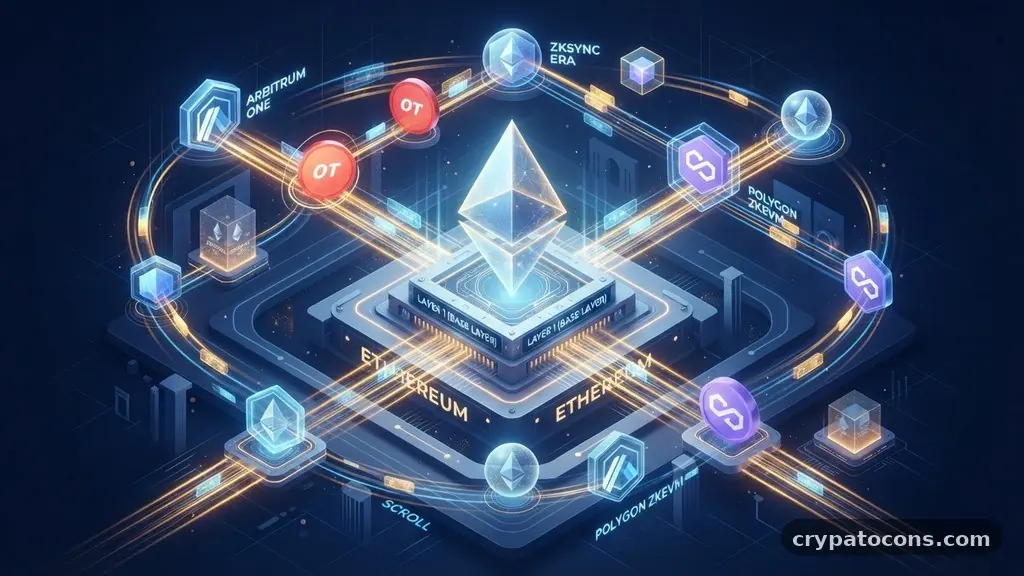
What Is Ethereum Layer 2? Scaling the Future of Finance?
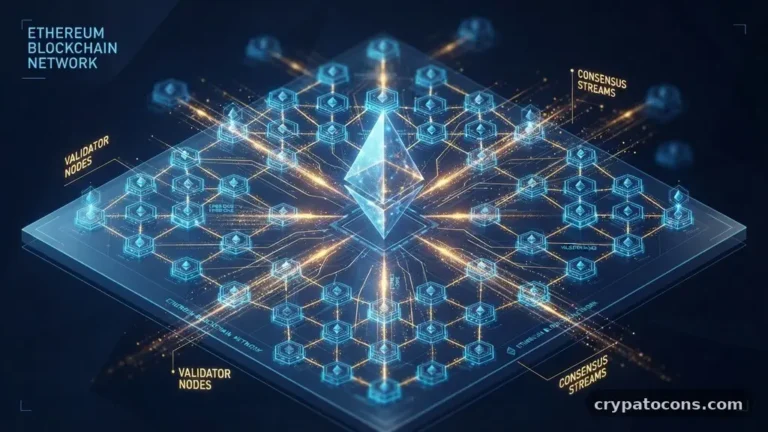
Understanding what Ethereum Layer 2 is becomes much simpler when you view it as a high-speed express lane built on top of the main highway. While the primary Ethereum blockchain handles the most critical security and finality, these secondary networks manage the heavy lifting of everyday transactions.
By bundling thousands of activities together before reporting them back to the main chain, these solutions drastically reduce costs and increase speed for users. This article explores how these systems function, why they are essential for the future of decentralized finance, and how they maintain the integrity of the original network while enabling mass adoption.
How Ethereum Layer 2 Networks Function
At its core, an Ethereum Layer 2 acts as a separate execution environment that communicates with the main Ethereum chain. Instead of forcing the main network to process every single interaction, the Layer 2 network gathers these requests off-chain. This off-chain processing is the secret to why these systems can handle thousands of transactions per second.
Once a large batch of data is processed, the network creates a compact proof. This proof is then submitted to the main Ethereum chain to verify that the operations were performed correctly.
The primary goal here is to alleviate congestion on the base layer, often called Layer 1. Because the main Ethereum chain has limited space in every block, demand often outstrips supply, leading to high fees.
By moving the majority of activity to a secondary layer, the network effectively expands its throughput without requiring every participant to upgrade their hardware or compromise on decentralization. This architecture keeps the main chain as the ultimate source of truth while the Layer 2 handles the high-frequency workload.
The Mechanics of Rollups
The most prominent technology powering these scaling solutions today is known as a rollup. A rollup essentially takes a massive amount of transaction data, compresses it, and rolls it into a single submission for the main Ethereum network.
This reduces the amount of data the main chain must store, which directly correlates to lower gas fees for every user involved. There are two primary varieties of these rollups that define the current technical landscape.
Optimistic rollups assume that all transactions are valid by default unless proven otherwise. They provide a window of time for anyone to challenge a transaction if they suspect fraud. Zero-knowledge rollups, or ZK-rollups, take a different approach by using complex mathematics to generate a validity proof.
This proof ensures that the transactions are correct before they are ever submitted to the main chain. Both methods are effective at maintaining high levels of security while offering a significant boost in performance.
Why Scaling Solutions Matter for Web3
For decentralized applications and digital asset platforms to reach a global audience, they must be accessible to everyone, not just those who can afford high transaction costs. When fees on the main Ethereum network spike, it creates an exclusionary environment where only large-scale investors can participate.
Ethereum Layer 2 technology effectively democratizes access by bringing those costs down to mere cents. This affordability allows developers to build complex games, social platforms, and financial tools that were previously impossible on the main chain.
Consider the user experience of interacting with a decentralized exchange or a digital wallet. Without these scaling solutions, a simple trade might cost $20 or $50 depending on network activity. With a Layer 2 integration, that same trade often costs less than a nickel.
This shift in economics is what allows for micro-transactions, such as paying for individual content pieces or tipping creators in real-time. It moves the entire ecosystem toward a model that can support millions of concurrent users rather than just a few thousand.
Comparing Layer 1 and Layer 2
Distinguishing between the base layer and its secondary counterparts is vital for anyone participating in the blockchain ecosystem. The main Ethereum chain is the foundation that provides the security and decentralization that users trust.
It is the settlement layer where the most valuable assets are held and where finality is guaranteed. However, the trade-off for this high level of security is a slower transaction throughput and higher overhead costs.
Layer 2 networks prioritize speed and low costs while inheriting the security of the underlying chain. They do not exist in isolation; they rely on the main chain to verify their state and ensure that the assets moved between layers remain secure.
You can think of the main chain as the vault and the Layer 2 as the high-speed operating system that manages daily spending. Below is a comparison of how these two layers differ in their primary operational focus.
| Feature | Ethereum Layer 1 | Ethereum Layer 2 |
|---|---|---|
| Primary Role | Security and Settlement | High-speed Execution |
| Throughput | Limited (15-30 TPS) | High (1,000+ TPS) |
| Cost per Transaction | Variable (can be very high) | Consistently low |
| Security Model | Base consensus protocol | Inherited from Layer 1 |
Security and Trust in Secondary Chains
A common concern for newcomers is whether moving assets to a secondary network introduces new risks. Because Layer 2 solutions are designed to inherit security from the main Ethereum network, they are considered significantly safer than independent sidechains.
The main chain keeps a record of the state changes, meaning that even if a specific Layer 2 operator were to go offline, the assets remain recoverable through the main network. This architecture is often referred to as “trust-minimized” because you don’t have to trust the operator; you trust the underlying code and the main chain.
However, it is important to note that the technology is still evolving. Developers are constantly refining the bridge mechanisms that move tokens between the base chain and the secondary layer. These bridges are the most critical points of potential failure, and they receive the most scrutiny from security researchers.
As the official Ethereum documentation highlights, the community is working toward standardized protocols to ensure that these transfers are as robust as the transactions themselves. Always verify that you are using reputable, established networks when moving assets.
Common Types of Scaling Solutions
While rollups are the most popular method, the ecosystem of scaling is diverse. Each approach offers different trade-offs regarding speed, cost, and complexity. Choosing the right one depends on the needs of the application, whether it is a high-frequency trading platform or a simple NFT marketplace.
- Optimistic Rollups: Use fraud proofs to ensure validity; ideal for general-purpose smart contracts.
- ZK-Rollups: Utilize advanced cryptography to prove correctness instantly; highly efficient for data storage.
- State Channels: Allow parties to transact off-chain repeatedly and only settle the final balance on-chain; perfect for recurring payments.
- Plasma: Creates child chains that report back to the parent chain, though this method is becoming less common in favor of rollups.
- Validiums: Similar to ZK-rollups but store data off-chain, which offers even higher throughput at the cost of slight trust assumptions.
The Future of Ethereum Scalability
The roadmap for Ethereum is clearly focused on making the network more efficient through modular architecture. Instead of trying to force the base layer to do everything, the developers are embracing a future where the main chain is a secure, decentralized backbone for many specialized execution layers.
This modular approach allows for rapid innovation. If a new, more efficient way to process transactions is discovered, it can be implemented on a new Layer 2 without needing to change the core Ethereum protocol.
As more users migrate to these solutions, the base layer will increasingly focus on what it does best: providing a secure, immutable foundation for the entire decentralized web. This division of labor is essential for the long-term sustainability of the network.
We are moving toward a reality where the average user will not even notice they are using a secondary layer, as wallets and applications will handle the technical complexities in the background. This invisible infrastructure is the true key to mainstream adoption.
Frequently Asked Questions
Is Ethereum Layer 2 a separate blockchain?
In a sense, yes, but it is deeply tethered to the main Ethereum network. It operates its own ledger and processes its own transactions, but it periodically posts data to the main chain to ensure that its state remains valid and secure. It cannot function independently of the main chain’s security guarantees.
Which Layer 2 should I use for my assets?
The best choice depends on your specific needs, such as which applications you want to use or which tokens you hold. Most major decentralized exchanges and wallets support multiple options, so you should check which networks your preferred platforms support. Always stick to established, well-audited solutions rather than newer or experimental ones.
Can I lose my money if a Layer 2 fails?
Because Layer 2 solutions are designed to be trust-minimized, you generally retain control of your assets even if a network operator stops functioning. The main Ethereum network keeps a record of the state, which allows for the recovery of funds. However, you should always be aware of the specific technical risks associated with the bridge you use to move your tokens.
Are transaction fees always lower on Layer 2?
Yes, in almost every scenario, using an Ethereum Layer 2 will result in significantly lower fees compared to the main chain. Because the cost of submitting a batch of transactions to the main chain is spread across thousands of users, your individual share is drastically reduced. This makes frequent interactions and small payments economically viable.
How does Ethereum Layer 2 compare to other blockchains?
Unlike moving to a completely different blockchain ecosystem, using a Layer 2 allows you to keep your assets within the Ethereum environment. You maintain access to the same ecosystem of liquidity, developers, and security standards. It is a way to scale the existing network rather than replacing it with something else entirely.
Understanding what Ethereum Layer 2 brings to the table is fundamental to navigating the current digital asset landscape. These scaling solutions have successfully transformed the network from a congested, expensive environment into a versatile platform capable of supporting complex applications. By offloading the heavy lifting to secondary layers, the ecosystem ensures that security remains a top priority while simultaneously lowering the barrier to entry for users worldwide.
As the technology continues to mature, we can expect even more seamless integration and greater efficiency across the board. If you are looking to interact with decentralized applications, exploring these networks is the most practical step you can take to optimize your costs and experience. The future of the decentralized web relies on this efficient, layered approach to growth.