How Does a Blockchain Explorer Work?: A Practical Guide?
Understanding how does a blockchain explorer work is essential for anyone who wants to move beyond simply owning cryptocurrency and start interacting with the underlying network. At its core, a blockchain explorer acts as a search engine for a specific decentralized ledger, allowing you to peek behind the curtain of digital transactions.
By providing a transparent interface to view data that is otherwise locked in complex code, these tools bridge the gap between technical infrastructure and human users. You will learn how these platforms retrieve information, why they are crucial for verifying assets, and the specific steps to interpret the data you find on the screen.
The Fundamental Purpose of Blockchain Explorers
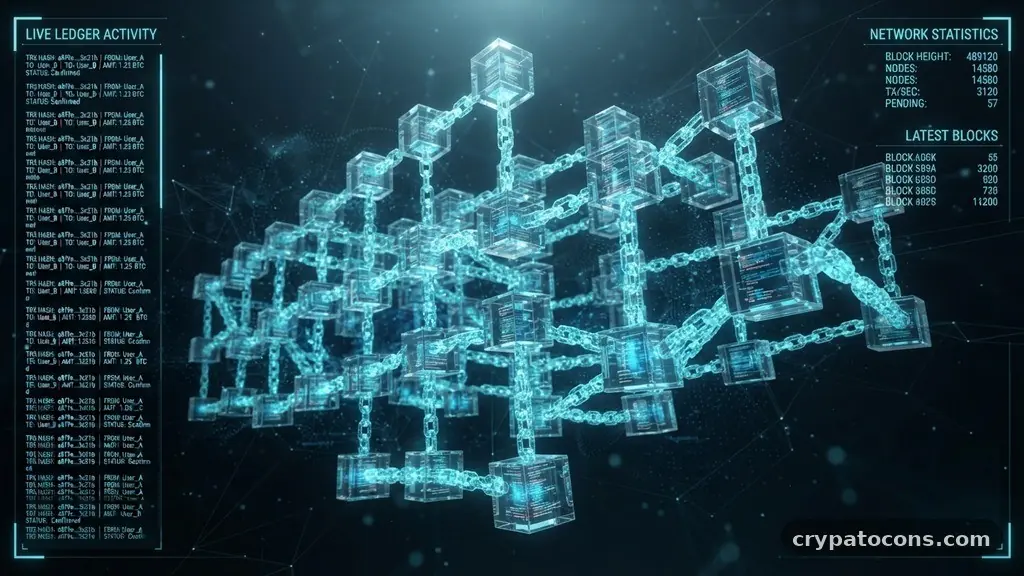
A blockchain explorer is essentially a window into a public, immutable database. When you use a blockchain explorer, you are accessing a node that has indexed the entire history of a specific network, such as Bitcoin or Ethereum.
Instead of deciphering raw hexadecimal code, the explorer translates that data into a readable format. This transparency is the primary value proposition of distributed ledger technology.
Without these tools, the average person would have no way to verify if a transaction actually occurred. You would be forced to trust a third-party exchange or a wallet provider to tell you the status of your funds.
By using an explorer, you regain autonomy by checking the ledger yourself. You can confirm that a transaction is settled, view the balance of a public address, and monitor the health of the network in real time.
How Data Retrieval Actually Functions
To understand how does a blockchain explorer work, you must look at the backend architecture. These services maintain their own full nodes, which are computers that download and store a complete copy of the blockchain’s history.
As new blocks are added to the network, the explorer’s node validates these blocks and updates its database accordingly. This database is then organized in a way that allows for rapid querying.
When you type an address or a transaction ID into the search bar, the explorer does not search the entire live network at that exact millisecond. Instead, it queries its own indexed database that has already processed the raw data from the blockchain.
This allows for near-instant results for queries that would otherwise take significant computing power to resolve. The speed of the search depends on how efficiently the platform has indexed the transaction history.
Interpreting Transaction Details and Status
Every transaction you see on an explorer contains specific, immutable metadata. When you look up a hash, you are viewing the cryptographic signature that proves a transfer of value took place.
The explorer displays the sender’s address, the receiver’s address, the amount transferred, and the timestamp. It also shows the gas fees or mining rewards involved in processing that specific operation.
One of the most important metrics to watch is the confirmation count. A transaction is considered “pending” or “unconfirmed” when it is sitting in the mempool, waiting for a miner or validator to include it in a block.
Once it is included, the confirmation count begins to rise as subsequent blocks are added on top of it. This process effectively makes the transaction harder to reverse or tamper with over time.
The Role of Public Addresses and Wallets
It is a common misconception that a blockchain explorer shows you what is inside your personal wallet. In reality, a wallet is just a piece of software that holds your private keys, while the explorer shows the data associated with your public address on the ledger. Your address is a public identifier, much like a bank account number, which anyone can view if they know where to look.
Because the ledger is public, you can view the transaction history of any address on the network. This does not mean you can control those funds, as that requires the corresponding private key.
Explorers are often used to track the movement of large amounts of crypto, sometimes referred to as “whale watching.” By monitoring these addresses, analysts can gain insights into market sentiment and liquidity flows.
Navigating Smart Contracts and Tokens
Modern blockchain explorers go far beyond tracking simple coin transfers. On networks like Ethereum, they are capable of parsing the interactions between users and smart contracts.
When you interact with a decentralized application, the explorer shows the function calls and the internal state changes triggered by that interaction. This is vital for developers and power users who need to debug or verify the execution of code on the chain.
Tokens, such as ERC-20 assets, also rely on these explorers for visibility. You can see the total supply, the number of holders, and the specific smart contract address that governs the token’s logic. If you are participating in a decentralized finance protocol, the explorer is your primary tool for confirming that your deposits and withdrawals were executed correctly.
Comparing Different Explorer Features
Not all explorers offer the same level of depth or usability. Some are designed specifically for one currency, while others support multiple chains and integrated token standards. The following table highlights common features found across various types of blockchain explorers.
| Feature | Basic Explorer | Advanced Explorer |
|---|---|---|
| Transaction History | Yes | Yes |
| Smart Contract Verification | No | Yes |
| API Access for Devs | Limited | Full |
| Gas Price Analytics | No | Real-time |
| NFT Metadata Viewer | Limited | Full |
Common Misconceptions About Safety
Many users worry that using a blockchain explorer might expose them to hacking or theft. It is important to remember that these sites are read-only interfaces.
They cannot move your funds, access your private keys, or interact with your hardware wallet unless you explicitly sign a transaction through an external connection. Viewing your address on an explorer is a safe, passive activity.
However, you should always ensure you are using the official URL of a reputable service. Phishing sites often mimic the appearance of popular explorers to trick users into entering their recovery phrases.
Always verify the domain name before interacting with any site, and never input sensitive data like seed phrases or private keys into any browser-based tool. You can find more information on network standards at the official Ethereum documentation regarding node interactions.
Key Indicators of Network Health
Beyond individual transactions, explorers provide a high-level view of the entire network. They display real-time statistics that indicate how well the chain is performing.
These include the average block time, the current hash rate or staking participation, and the total transaction volume over a 24-hour period. These numbers are vital for understanding the security and decentralization level of the network.
* Block Height: The total number of blocks created since the genesis of the chain.
* Difficulty: How hard it is for miners to find a new block.
* Mempool Size: The number of pending transactions waiting for confirmation.
* Active Addresses: The count of unique wallets that have sent or received funds recently.
* Network Hash Rate: The total computational power securing a proof-of-work chain.
Frequently Asked Questions
Is it possible to reverse a transaction using an explorer?
No, a blockchain explorer is strictly a read-only tool. It displays the state of the ledger but has no authority or technical capability to modify, revert, or cancel any transaction that has already been confirmed on the network.
Are blockchain explorers free to use?
Yes, most major explorers are free for the public. They generate revenue through advertisements, premium analytics services for enterprises, or by providing API access to developers who need to build applications on top of their indexed data.
Why does my transaction say unconfirmed for a long time?
This usually happens because the network is congested or the gas fee you paid was too low. Miners prioritize transactions with higher fees, so if your fee is below the current market rate, your transaction may stay in the mempool until the network clears or the fee is manually increased.
Can I use an explorer to find who owns a specific address?
While you can see all the transactions associated with an address, you cannot see the name or identity of the owner. Blockchain addresses are pseudonymous, meaning that unless the owner has publicly linked their identity to that address, it remains an anonymous string of characters.
Is my money safe if I see it on the explorer?
Seeing your funds on an explorer means they are correctly recorded on the ledger and linked to your public address. However, your actual safety depends on you being the only person who possesses the private keys required to move those funds from that address.
Final Thoughts
Learning how does a blockchain explorer work is a significant step toward achieving true financial sovereignty in the digital age. These platforms transform abstract cryptographic data into actionable information, allowing you to monitor your assets and understand the mechanics of the networks you use. By regularly checking your transactions and observing network activity, you develop a deeper intuition for how value moves across the globe without intermediaries.
Remember to prioritize security by bookmarking official sites and staying vigilant against phishing attempts. As you become more comfortable with these tools, you will find that the blockchain is far more transparent and accessible than it initially appears. Take the time to explore your own transaction history today and see the ledger for yourself.