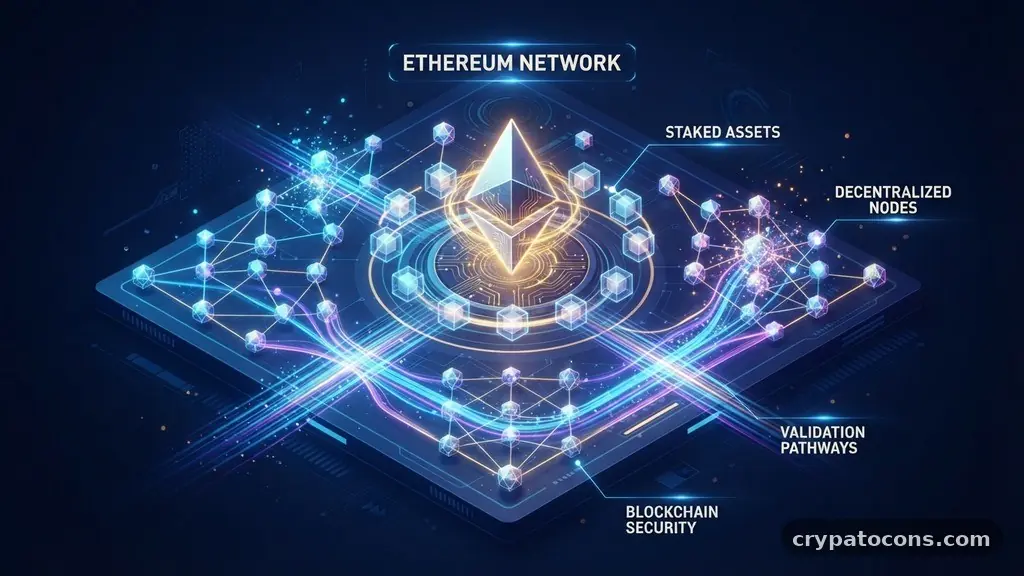
What Is Ethereum Staking?
Understanding Ethereum Staking is essential for anyone looking to participate in the security and governance of the blockchain while potentially earning passive income. By locking up your digital assets, you help maintain the network‘s integrity through a process that replaced the energy-intensive mining model.
This shift has fundamentally changed how the ecosystem operates and how individual holders interact with their capital. If you are curious about what happens behind the scenes when you commit your holdings to the protocol, this overview will clarify the mechanics, risks, and rewards involved in the process.
Defining the Core Mechanics
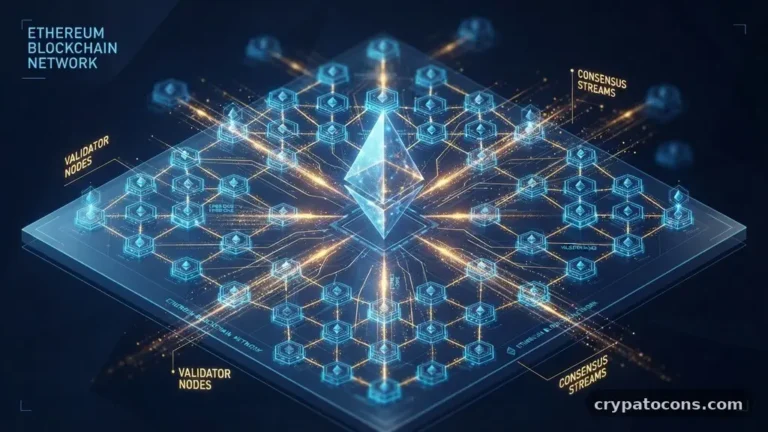
At its heart, Ethereum Staking is the process of depositing 32 ETH to activate a validator node. This validator is responsible for storing data, processing transactions, and adding new blocks to the blockchain.
Instead of using high-powered hardware to solve complex math problems, the network relies on these validators to attest to the validity of transactions. By participating, you are essentially acting as a digital auditor for the entire system.
The security of the network depends on these validators remaining honest and online. If a validator acts maliciously or goes offline for an extended period, the protocol can impose penalties known as slashing.
This mechanism ensures that participants have a financial incentive to keep the network healthy and operational. When you choose to stake, you are committing your assets to support this decentralized infrastructure.
The Transition from Proof of Work
For many years, the blockchain relied on Proof of Work, which required massive amounts of electricity to secure the ledger. In September 2022, the network underwent a monumental upgrade known as The Merge, transitioning entirely to Proof of Stake.
This change reduced the energy consumption of the network by approximately 99.9%. It marked the end of traditional mining and the beginning of the current era of asset-based validation.
This transition was not just about environmental sustainability; it was about scalability and long-term viability. By removing the need for specialized hardware, the network lowered the barrier to entry for securing the blockchain.
While running an individual node still requires a significant amount of capital, the overall architecture became more resilient and efficient. Developers can now focus on building applications on a foundation that is both secure and environmentally conscious.
How Rewards Are Calculated
When you provide your assets to the network, you earn rewards for your contribution to consensus. These rewards are paid out in the native currency of the chain and are derived from transaction fees and protocol-level issuance.
The yield you see is not a fixed interest rate, but rather a variable return that fluctuates based on the total amount of assets participating in the system. As more participants join, the individual yield typically trends downward.
The actual rewards are distributed based on the performance of your validator. Reliable uptime is the primary driver of consistent returns.
If your validator misses attestation duties, your effective yield will decrease. Many users choose to join pools to mitigate this risk, as these services handle the technical requirements of maintaining high uptime.
| Staking Method | Ease of Use | Control over Keys | Typical Fees |
|---|---|---|---|
| Solo Staking | Low | High | None |
| Centralized Exchange | High | Low | 15% – 25% |
| Liquid Staking | Medium | Medium | 5% – 10% |
Pathways to Participation
There are several ways to engage with the protocol, ranging from running your own infrastructure to using third-party services. Solo staking is the gold standard for decentralization, but it requires technical expertise and the full 32 ETH commitment.
If you do not have that amount or the technical skills, you might look at other options. Most people interact with the system through exchanges or specialized protocols.
Exchanges like Coinbase provide a user-friendly interface that abstracts away the technical complexities. You simply click a button, and the exchange handles the validator duties on your behalf.
While this is convenient, it does introduce a layer of counterparty risk. You are trusting the institution to manage your assets correctly and to distribute the rewards accurately.
- Solo Staking: Requires 32 ETH and a dedicated computer running 24/7.
- Staking-as-a-Service: You provide the 32 ETH, a third party manages the software.
- Pooled Staking: You contribute any amount to a pool that aggregates funds to reach the 32 ETH threshold.
- Exchange Staking: The easiest route, where the exchange manages everything for a commission.
Understanding the Risks
While earning yield is attractive, it is vital to acknowledge that Ethereum Staking is not without risk. The most significant concern for many is the lock-up period, which was historically indefinite.
Following the Shanghai upgrade, users can now unstake their assets, but the process is subject to a queue. This means you cannot necessarily withdraw your funds instantly during periods of high network volatility.
Another risk factor is the possibility of slashing. If a validator acts dishonestly, a portion of the staked balance is permanently removed as a penalty. While this is rare for well-managed nodes, it remains a technical possibility.
Furthermore, there is smart contract risk if you use decentralized liquid staking protocols. If the protocol code contains a vulnerability, your staked assets could be at risk of theft or permanent loss.
The Role of Liquid Staking
Liquid staking has become a dominant force in the ecosystem, offering a solution to the problem of asset illiquidity. When you stake through these platforms, you receive a derivative token that represents your staked position.
This token can be traded, sold, or used in other decentralized finance protocols while your original assets continue to earn rewards. It effectively unlocks the utility of your capital.
However, this convenience comes with a trade-off in terms of decentralization. A large portion of the network’s stake is currently concentrated in a small number of liquid staking protocols.
This concentration creates a potential point of failure if those protocols were to be compromised or censored. It is a constant topic of debate within the developer community as they look for ways to distribute power more evenly across the network.
Tax Implications of Rewards
The regulatory landscape regarding crypto assets is still evolving, and it is important to understand how your jurisdiction treats rewards. In many countries, the rewards you earn are considered taxable income at the time they are received.
This means you may owe taxes on the value of the rewards based on the price of the asset on the day they hit your wallet. Tracking these transactions can become complex if you are participating in multiple pools.
Because you are essentially receiving a continuous stream of small payments, the record-keeping burden is high. Using specialized software to track your portfolio is often necessary to stay compliant with local tax laws.
You should consult with a financial advisor who understands the nuances of digital assets. Never assume that the platform will provide you with a comprehensive tax document that covers every aspect of your activity.
Common Questions
What happens when I unstake my Ethereum?
When you choose to unstake, your request enters a queue managed by the network. It does not happen instantly.
The time it takes to fully withdraw your funds depends on how many other validators are exiting at the same time. Once the exit is processed, the assets are returned to your withdrawal address.
Is it possible to lose my staked assets?
Yes, there are risks of loss, particularly through slashing if a validator acts maliciously. Additionally, if you use a third-party service or a liquid staking protocol, you are exposed to the risk of that platform failing or being hacked. While the underlying protocol is designed to be secure, your choice of service provider determines your exposure to these external risks.
Do I need 32 ETH to participate?
You do not need 32 ETH if you use a pooled staking service or a centralized exchange. These platforms allow you to contribute smaller amounts, which are then aggregated with other users’ funds to meet the 32 ETH requirement for a validator. However, solo staking does strictly require the full 32 ETH to run your own node.
Is staking the same as mining?
No, staking is fundamentally different from the old mining process. Mining involved using hardware to secure the network, whereas staking involves locking up capital to secure the network. The consensus mechanism shifted from Proof of Work to Proof of Stake, which removed the need for energy-intensive mining rigs.
Can I move my staked assets freely?
Generally, no. When your assets are staked, they are held in a smart contract and are not available for immediate transfer.
If you use a liquid staking protocol, you get a derivative token that you can move or trade, but the underlying assets remain locked. You must initiate the unstaking process to regain full control of your original holdings.
Future Outlook
The future of Ethereum Staking looks to be centered on further decentralization and improved user experiences. Developers are working on ways to reduce the capital requirement for individual validators and to make the process more efficient.
As the ecosystem matures, we will likely see more institutional-grade tools that make it easier for large entities to participate safely. The goal remains to keep the network as distributed as possible.
Participation in the network is a long-term commitment that rewards those who are patient and diligent. By understanding the mechanics of how your assets help secure the blockchain, you can make informed decisions about your involvement.
Whether you are a solo validator or a casual participant using a pool, your contribution plays a role in the ongoing evolution of decentralized finance. Keep an eye on protocol updates and community governance, as these will continue to shape the landscape of this technology for years to come.