
What Is Crypto Staking?
Crypto staking is a method of earning passive income by holding specific digital assets to support the operations of a blockchain network. By locking up your coins, you help verify transactions and secure the ecosystem, receiving newly minted tokens as a reward for your participation. This process has become a primary way for investors to increase their holdings without actively trading.
Understanding how this system functions is essential for anyone looking to participate in modern decentralized finance. In the following sections, we explore the mechanics, risks, and benefits associated with this popular practice.
Defining the Core Mechanics
At its heart, the process involves committing your cryptocurrency to a proof-of-stake blockchain. Unlike older mining models that require expensive hardware and massive electricity consumption, this system relies on participants who hold and “lock” their assets.
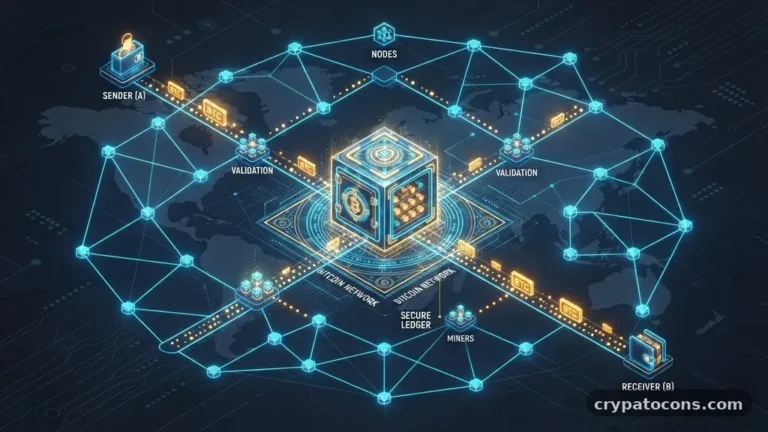
When you stake, you are essentially delegating your voting power to a validator. This validator is a node responsible for processing transactions and adding new blocks to the chain.
The network selects validators based on the amount of coins they hold or have been delegated. Once chosen, they must prove their honesty by keeping their assets locked in the protocol.
If they act maliciously, such as attempting to validate fraudulent transactions, the network may impose a penalty known as “slashing.” This mechanism ensures that participants have a financial incentive to keep the network secure and operational.
For the average investor, this entire sequence happens behind the scenes. You simply choose an amount to commit, and the software handles the communication with the blockchain.
Your rewards are typically distributed at regular intervals, often compounding over time. This makes it a popular choice for long-term holders who prefer steady growth over the volatility of day trading.
Why Networks Use Staking
Blockchain networks require a distributed way to reach consensus without a central authority. In a proof-of-stake model, the network achieves this by requiring participants to put their capital at risk.
This creates a “skin in the game” environment where the security of the chain is backed by the value of the tokens themselves. It is a highly efficient way to maintain decentralization while ensuring that the system remains resistant to attacks.
Without this commitment from users, a network would be vulnerable to various exploits, such as 51% attacks. By requiring a significant stake to participate in validation, the cost of attacking the network becomes prohibitively expensive. The participants who secure the network are rewarded for their service, which aligns their interests with the health and stability of the blockchain.
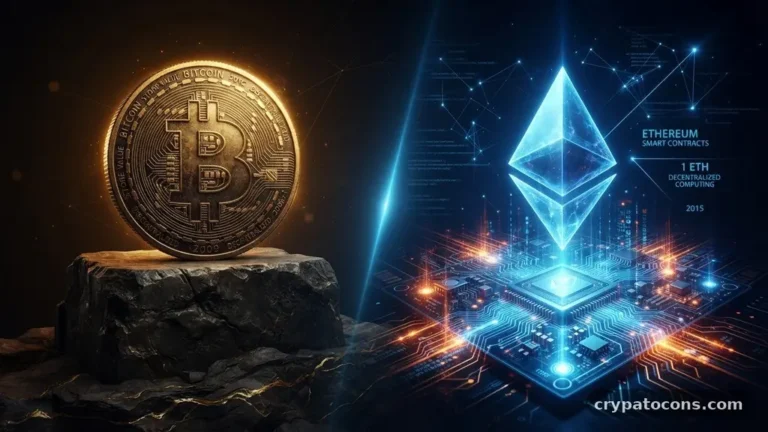
This model also reduces the environmental impact compared to proof-of-work systems like Bitcoin. Because there is no need to solve complex mathematical puzzles through high-powered hardware, energy usage remains minimal.
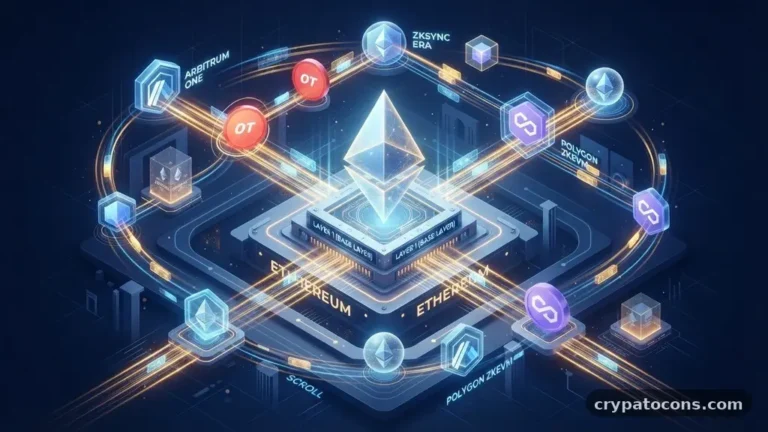
Many modern projects, including Ethereum, have transitioned to this model specifically to improve scalability and sustainability. It is a cornerstone of the infrastructure that supports the current wave of decentralized applications.
The Expected Rewards
When you participate in this activity, you earn rewards expressed as an Annual Percentage Yield (APY). These yields fluctuate based on the total amount of assets locked across the network and the specific rules of the protocol.
When more people participate, the individual rewards often decrease because the total pool of newly minted coins is distributed among more participants. Conversely, lower participation rates can lead to higher yields for those who continue to stake.
Rewards are typically paid out in the same currency that you have staked. This can be beneficial if the price of the asset appreciates, as you are earning interest on an increasing principal balance.
However, if the price of the underlying token drops significantly, the value of your rewards may not cover your initial investment. It is important to look at the historical performance and the inflation rate of the specific token before committing your funds.
Platforms like Coinbase provide simplified interfaces that allow users to participate in these programs with just a few clicks. These services often take a small commission from the rewards in exchange for managing the technical overhead and server maintenance. For beginners, this is often the most accessible way to start without needing to run their own validator node.
Comparing Different Approaches
There are multiple ways to enter the ecosystem, each with different levels of control and risk. Some users prefer to run their own infrastructure, while others choose custodial services or decentralized protocols. The following table highlights the primary differences between these common methods of participation.
| Method | Control | Technical Skill | Fees |
|---|---|---|---|
| Solo Staking | Full | High | Zero |
| Exchange Staking | Low | Minimal | Variable |
| Liquid Staking | Medium | Low | Moderate |
Solo staking requires you to maintain a dedicated server and keep it online 24/7. While this offers the highest level of security and autonomy, it is not practical for everyone.
Liquid staking protocols, by contrast, offer a unique solution where you receive a derivative token in exchange for your locked assets. This allows you to maintain liquidity while still earning rewards, which is a major advantage for active DeFi users.
Key Risks to Consider
While the prospect of earning interest sounds attractive, there are distinct risks that every user must acknowledge. The most significant concern is price volatility.
If the value of your staked coins drops by 20% over a year, a 5% staking reward will not prevent you from experiencing a net loss. You should only stake assets that you intend to hold for the long term regardless of short-term market movements.
Another risk involves the “lock-up” periods or unstaking delays. Many protocols require you to wait for a specific duration after requesting a withdrawal before your funds are released.
During this window, you cannot sell your assets, even if the market is crashing. Always check the protocol’s documentation to understand how long it takes to regain access to your holdings.
Slashing is a rarer but more severe risk. If the validator you delegated to acts improperly, a portion of the staked assets can be permanently destroyed.
While reputable validators rarely experience this, it is a reminder that your security is tied to the reliability of your chosen node. Diversifying your stake across different validators can help mitigate this specific danger.
Getting Started Step-by-Step
To begin, you must first acquire a supported cryptocurrency. Not every coin allows for this process, so ensure your chosen asset uses a proof-of-stake consensus mechanism.
Once you own the assets, you need to decide on a platform that suits your comfort level. If you are using a centralized exchange, the process is usually as simple as clicking a “Stake” button on your dashboard.
If you are using a self-custody wallet, you will need to navigate to the staking section of the protocol’s website. You will be asked to connect your wallet, which allows you to interact with the blockchain directly.
After selecting a validator and confirming the transaction, your assets will be locked into the smart contract. You will then start earning rewards according to the schedule defined by that specific blockchain.
Keep a detailed record of your transactions for tax purposes. In many jurisdictions, staking rewards are considered taxable income at the time they are received.
Tracking the value of these rewards at the moment of distribution is crucial for accurate reporting. Many users find it helpful to use specialized tracking software to automate this process.
- Research the project’s long-term viability and inflation rate.
- Choose a reputable validator or exchange with a proven track record.
- Ensure you have a secure hardware wallet for long-term storage.
- Monitor your rewards periodically to ensure the node is performing correctly.
- Understand the tax implications in your local jurisdiction.
Common Misconceptions
A frequent misunderstanding is that this process is risk-free. Some people view it as a high-yield savings account, but the underlying assets are digital tokens that can lose value rapidly.
It is not a guaranteed way to make money; it is a way to earn more of a specific asset. You are essentially betting on the future success of that blockchain network.
Another misconception is that your funds are always accessible. While some platforms offer “flexible” staking, many require a lock-up period.
Do not commit funds that you might need for an emergency next week. The liquidity constraints are a fundamental part of how these networks maintain their security.
Finally, people often assume that all staking programs are identical. In reality, every project has different rules, reward structures, and risk profiles.
A protocol offering 50% APY might be highly inflationary, meaning the value of your tokens could be diluted by the constant creation of new supply. Always look beyond the headline yield to understand the economic model of the project.
Frequently Asked Questions
Is staking in crypto worth the risk?
Whether it is worth it depends on your risk tolerance and your belief in the underlying project. If you are already a long-term holder, it is an efficient way to accumulate more coins. However, if you are only interested in the yield, you must weigh the potential rewards against the risk of price volatility and technical failure.
Can I lose my money if I stake?
Yes, you can lose money. While you don’t necessarily lose your coins to theft, the value of the asset itself can fall significantly. Additionally, if the validator you choose is penalized for downtime or malicious behavior, your stake could be partially slashed by the protocol.
Which crypto is best for beginners?
Large, established networks are generally considered the safest starting point. Ethereum and other major layer-one blockchains have well-documented processes and extensive support from reputable exchanges. Sticking to well-known assets reduces the risk of encountering obscure, poorly maintained protocols.
How long do I have to lock my assets?
The duration varies by network and platform. Some allow you to unstake instantly, while others enforce a “bonding” period that can last anywhere from a few days to several weeks. Always check the specific rules of the protocol before you finalize your decision.
Concluding Thoughts
Engaging with this technology offers a unique way to participate in the growth of decentralized networks. By understanding the mechanics of how these systems function, you can make informed decisions about your financial future. Whether you choose to use a simple exchange interface or delve into self-custody, the consistent accumulation of assets remains a compelling strategy for many.
Remember that crypto staking is a long-term commitment that requires patience and research. Always prioritize the security of your private keys and stay updated on the performance of the projects you support. As the industry evolves, continue to refine your approach and adapt to the changing landscape of digital finance.